
Maxim Energy · Home battery buying guide · Victoria
Fox ESS vs SOFAR batteries: which system suits your home?
Fox ESS and SOFAR serve two different buying situations rather than competing in the same class. If your budget allows, Fox ESS is our preferred long-term system for its product quality, modular plug-and-play design, easier installation, expansion, higher-power options and ownership experience. If budget would otherwise stop you installing a battery, SOFAR offers exceptional capacity for the money: approximately 30 kWh with approximately 5 kW inverter power for $3,500.
Our comparison is based on single-phase home battery packages. Three-phase systems use different configurations and equipment. We install both brands; this guide reflects our team’s experience with configurations commonly supplied by the Australian suppliers we work with, as at 17 September 2026.
Which systems does this guide cover?
We compare Fox ESS and SOFAR technology through the Australian packages we supply and install. Model names appear where an exact capacity or configuration matters. This is not a description of every product in either brand’s worldwide catalogue.
Inverters, batteries, meters, firmware and monitoring platforms can change. Other configurations may exist, be less common locally or arrive later. Our comments on installation and app use describe the systems our team has worked with. Your quote will identify the proposed equipment and installation design. The main table and quick check use single-phase examples; three-phase protection, wiring and metering require a separate assessment.
The answer in 30 seconds
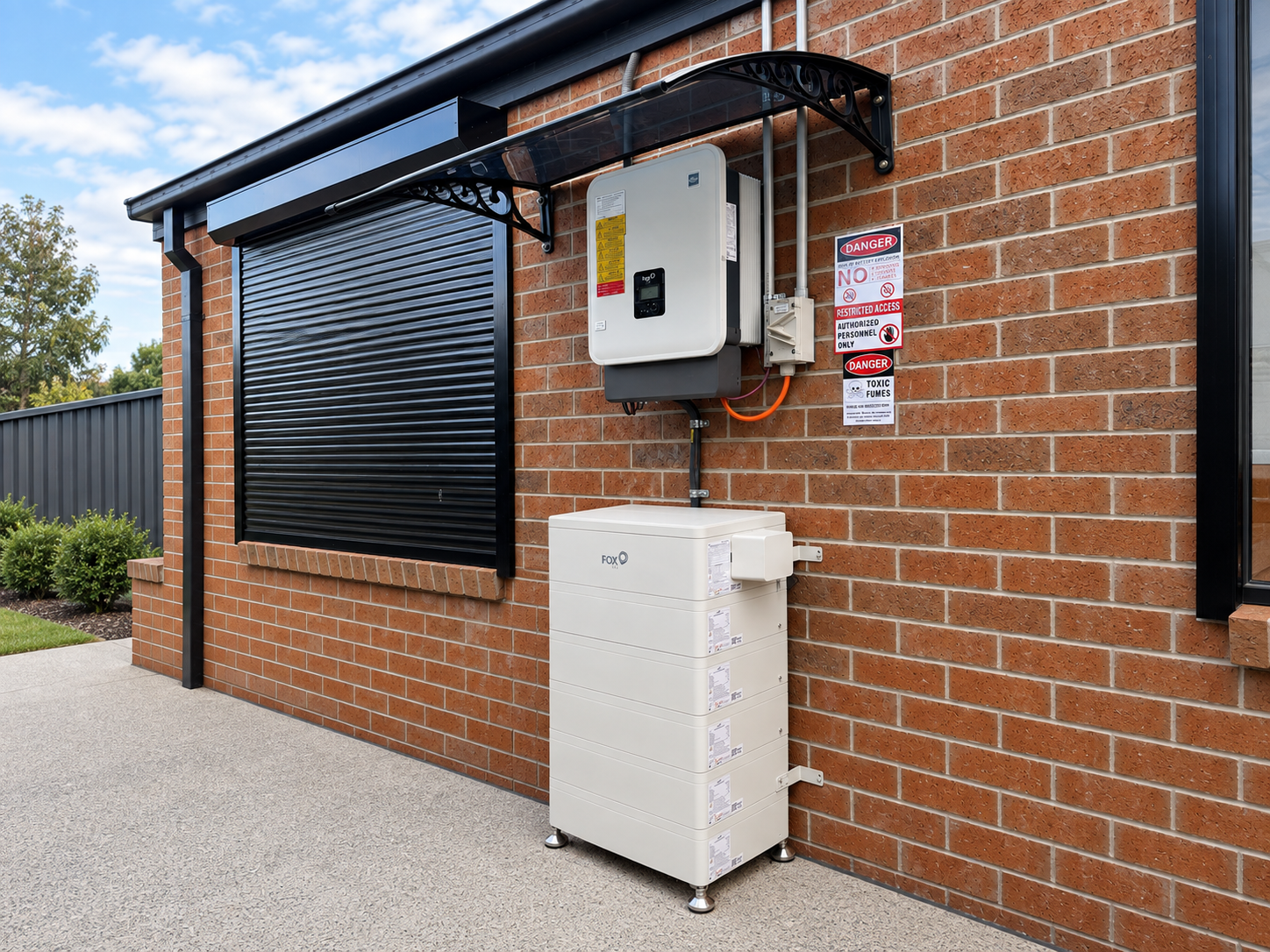
If you can afford the difference, Fox ESS is our recommendation. The additional cost is justified by a higher-grade overall system, modular plug-and-play battery architecture, more factory-completed assembly, fewer connections to make on site, faster and simpler installation, greater expansion, higher inverter-power options and our preferred app and support experience.
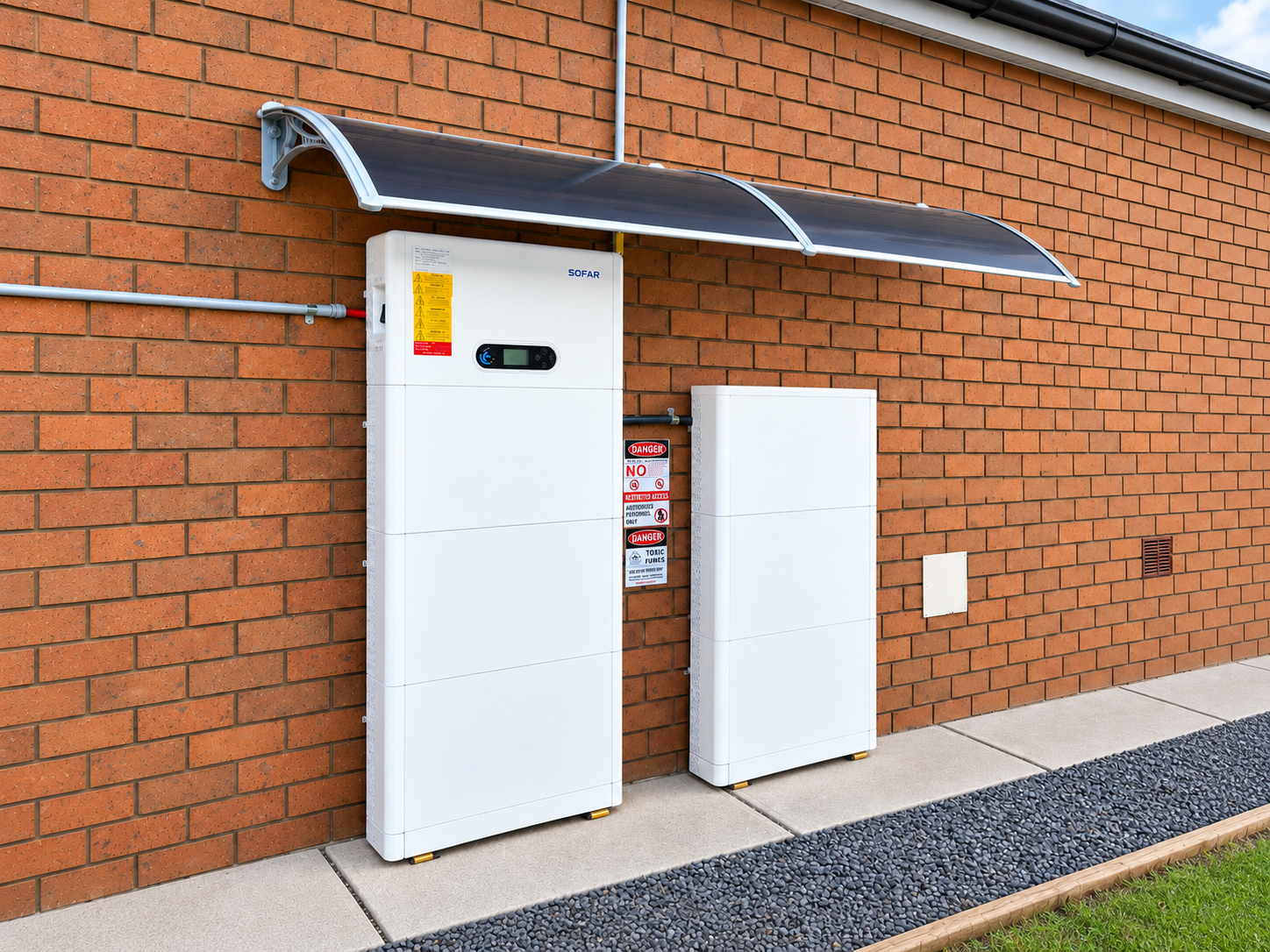
If budget is the deciding constraint, SOFAR is our budget-friendly high-capacity recommendation. When approximately 30 kWh of storage and approximately 5 kW inverter power meet the household’s needs, the $3,500 package delivers excellent capacity for the money. For someone choosing between installing SOFAR and postponing battery storage altogether, a suitable SOFAR system can be the worthwhile choice.
This is not a like-for-like contest. Fox ESS is the stronger long-term system; SOFAR solves a different problem by making high-capacity storage accessible at a much lower entry price.
Not sure which fits your home? Try the two-minute check or book a free consultation and site inspection.
Jump to a section
Fox ESS vs SOFAR at a glance
The main differences in our single-phase packages, without the technical terminology.
| What matters | Fox ESS | SOFAR |
|---|---|---|
| Best suited to | Our recommended long-term system when the premium is affordable | Budget-limited households prioritising maximum battery capacity per dollar |
| Example price · 5 kW system | $4,799 · approximately 28 kWh | $3,500 · approximately 30 kWh |
| Adding more storage later | More room to grow on a compatible inverter | Another system needed beyond about 30 kWh |
| Fitting the equipment | Compact integrated stack; separate inverter gives more layout options | Slim batteries; two towers at about 30 kWh |
| Spare switchboard space | Can need less space in our standard retrofits | Extra metering usually needs more space |
| Everyday use | Our preferred app and support experience | Useful local screen; more limited in the setups we discuss |
See exact models, capacities and compatibility sources
| What matters | Fox ESS | SOFAR PowerAll |
|---|---|---|
| Main reason to choose it | Stronger overall quality, integration, installation simplicity, expansion and ownership experience | Making approximately 30 kWh of storage achievable within a constrained budget |
| Example nominal capacity | 27.84 kWh: four CQ7 modules | 30.72 kWh: six BTS 5K modules |
| Expansion in the selected single-phase setup | CQ7 with the listed H1/KH series: up to 48.72 kWh, subject to the exact combination | Up to six 5.12 kWh modules per selected ESI inverter; another system is needed beyond that limit |
| Physical stacking | Integrated inter-module connectors on the compared stackable batteries | Three battery modules per tower in the compared installation layout; external inter-module leads |
| Space advantage | More storage in one approved tower; separately positioned inverter | Approximately 170 mm battery depth; useful beside parked cars |
| Existing solar retrofit | Grid-measurement-led control can simplify compatible layouts | Our compared AC-coupled installations use additional PV metering; check the proposed design |
| Everyday interface | FoxCloud; our team’s preferred experience for commissioning and monitoring | Useful local screen; app and remote-setting access depend on the supplied platform and firmware |
| Best starting point | Customers who can afford the premium and want the stronger long-term system | Customers whose budget would otherwise delay or prevent a battery purchase |
Capacity and compatibility references: Fox ESS Australian CQ7 compatibility list and SOFAR BTS 5K product information. Tower and metering observations describe the PowerAll installations discussed in this guide.
Is Fox ESS worth the extra money?
Yes—when your budget allows, we believe Fox ESS justifies the additional cost. You are paying for a more integrated, modular and installation-friendly system with greater expansion, higher inverter-power options and our preferred app and support experience. SOFAR belongs in a different buying category: it is the better capacity-per-dollar choice when the budget is the limiting factor and approximately 30 kWh with approximately 5 kW meets the need.
Fox ESS is one of Australia’s leading home-battery brands. According to SunWiz market data reported for February 2026, Fox ESS ranked first nationally for installed residential energy-storage capacity during that month. At Maxim Energy, our most popular Fox ESS package is currently the 10 kW single-phase inverter with approximately 28 kWh of battery storage. Read the Fox ESS market update or see independent industry coverage.
Our preferred starting point
Fox ESS · 5 kW
Approximately 28 kWh battery
$4,799
Approximately $1,300 above SOFAR.
Our most popular Fox ESS package
Fox ESS · 10 kW
Approximately 28 kWh battery
$5,499
Approximately $2,000 above SOFAR.
Best capacity for the money
SOFAR · approximately 5 kW
Approximately 30 kWh battery
$3,500
Approximately 30 kWh at the lowest upfront price in this comparison.
Advertised package examples checked 16 September 2026 · AUD, including GST and the applicable upfront STC discount for eligible installations. Standard installation and package conditions apply; site work and optional backup can change the price.
A home battery is a long-term purchase. The compared packages carry manufacturer warranties of up to 10 years, subject to their warranty conditions, and homeowners commonly plan around a 10-to-15-year ownership horizon. Spread over that period, a $1,300 premium is about $130 a year over 10 years, while a $2,000 premium is about $200 a year. The 15-year horizon is planning context, not a guaranteed service life.
See exact capacities, price conditions and what is included
| Package | SOFAR | Fox ESS |
|---|---|---|
| Battery example | 6 × BTS 5K | 4 × CQ7 |
| Nominal storage | 30.72 kWh | 27.84 kWh |
| Inverter used for this comparison | 5 kW single-phase | 5 kW single-phase |
| Advertised package price checked 16 September 2026 | $3,500 | $4,799 |
| Difference | $1,300 lower | $1,300 higher |
Prices include GST and the applicable upfront STC discount for eligible installations, under the respective package conditions. The public offers use rounded “30 kWh” and “28 kWh” descriptions; the nominal figures above identify the module examples being compared. Your written quote must confirm the exact inverter, battery models, usable capacity and scope. Non-standard electrical work, installation location, access, switchboard changes and optional backup can change the total. An existing or new solar PV system is required for the federal battery incentive.
Using these prices, Fox ESS is approximately 37.1% dearer than SOFAR; viewed the other way, SOFAR is approximately 27.1% cheaper than Fox ESS. Those percentages use different starting prices. “About 30% more” would not be an accurate description of the Fox ESS premium.
The energy difference is 2.88 kWh: 30.72 ÷ 27.84 − 1 = approximately 10.3%. This compares nominal capacity, not guaranteed usable AC energy. Usable capacity, reserve settings, conversion losses, temperature and operating limits affect what reaches the home. We do not treat the nameplate difference as a promise of 10% more bill savings.
The Fox ESS 10 kW example is $2,000 above the SOFAR 5 kW example. That comparison includes a higher-rated inverter, so it is not a like-for-like inverter-power comparison. Both Fox ESS examples shown here use approximately 28 kWh of nominal battery storage.
Will I be able to add more battery storage later?
Fox ESS gives you more room to expand on a compatible inverter. The compared SOFAR setup grows in roughly 5 kWh steps up to about 30 kWh; beyond that, you need another inverter and battery system.
See expansion limits and a real installation
Fox ESS offers more expansion headroom in the single-phase examples here. SOFAR still expands in small module increments—it is not restricted to 30 kWh or 60 kWh purchases.
For the SOFAR PowerAll configuration we install, one BTS 5K module provides 5.12 kWh nominal capacity. Two provide 10.24 kWh, three 15.36 kWh, and six 30.72 kWh. The selected inverter supports up to six modules. Beyond that limit, the design needs another inverter/battery system, associated circuits and switchboard integration—not simply another battery on the same tower.
With a compatible Fox ESS system, additional modules can increase storage while retaining the inverter and existing AC connection. That can be valuable if you expect an EV, more evening electricity use or a larger storage requirement. It does not increase the inverter’s kW rating.
Important limit: Fox ESS’s advertised “up to approximately 98 kWh” CQ7 battery range is not a promise that a 5 kW household package can reach that capacity. The Australian compatibility list checked for this guide shows up to 48.72 kWh with the listed H1 and KH single-phase series. Larger configurations require an appropriately compatible inverter and layout. Check the manufacturer’s inverter-specific combinations.
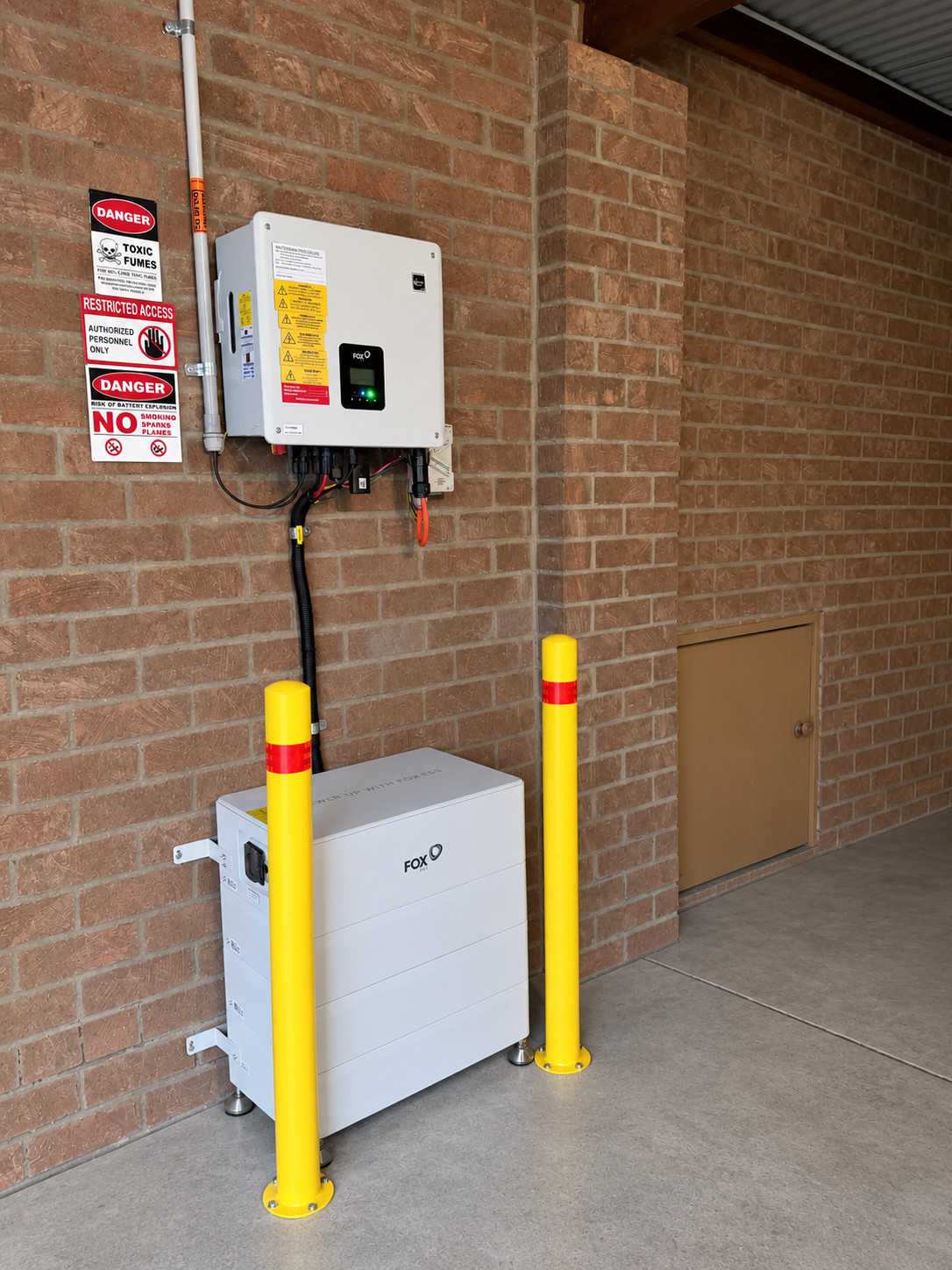
From an installation: This homeowner wanted the option of more storage later. We positioned the separate inverter with future tower height in mind. The useful feature is the planned upgrade path—not a guarantee that any number of modules can be added without further work.
What must be checked before adding modules?
The approved battery/inverter combination, tower limits, available space, battery generation, firmware, manufacturer expansion conditions and commissioning requirements all matter. Some expansions need additional bases, inter-tower cables or changes to the original installation. Work must be completed by a suitably qualified installer.
A larger battery also needs enough charging opportunity and useful demand. A nominal 60 kWh requirement is a design brief, not a reason to automatically order two SOFAR systems—or assume any single Fox ESS inverter will support it. Two SOFAR systems can be considered where their combined layout and electrical design are suitable; that is a substantially different installation from adding a module.
Physical modularity and future rebate eligibility are separate issues. See the rebate section before planning a staged purchase.
Which system fits the available space?
Fox ESS is substantially more compact overall in the capacities compared here, especially as storage increases. SOFAR’s individual towers are slim, but approximately 30 kWh needs two towers; Fox ESS can concentrate approximately 28 kWh in one integrated stack and position the inverter separately.
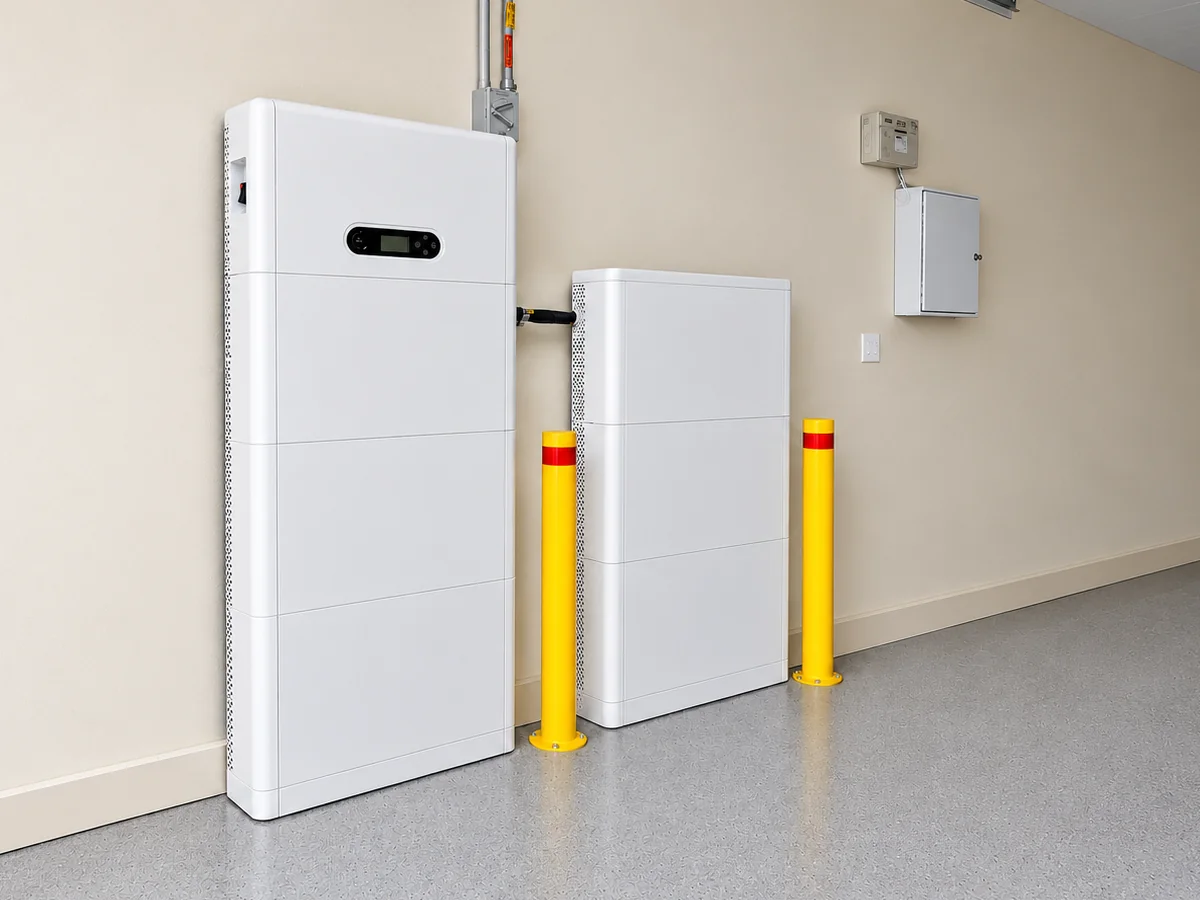
From an installation: In this garage, the slim SOFAR towers kept the equipment close to the wall while accommodating two protective bollards. It is a useful layout detail when assessing whether the budget package fits a customer’s garage.
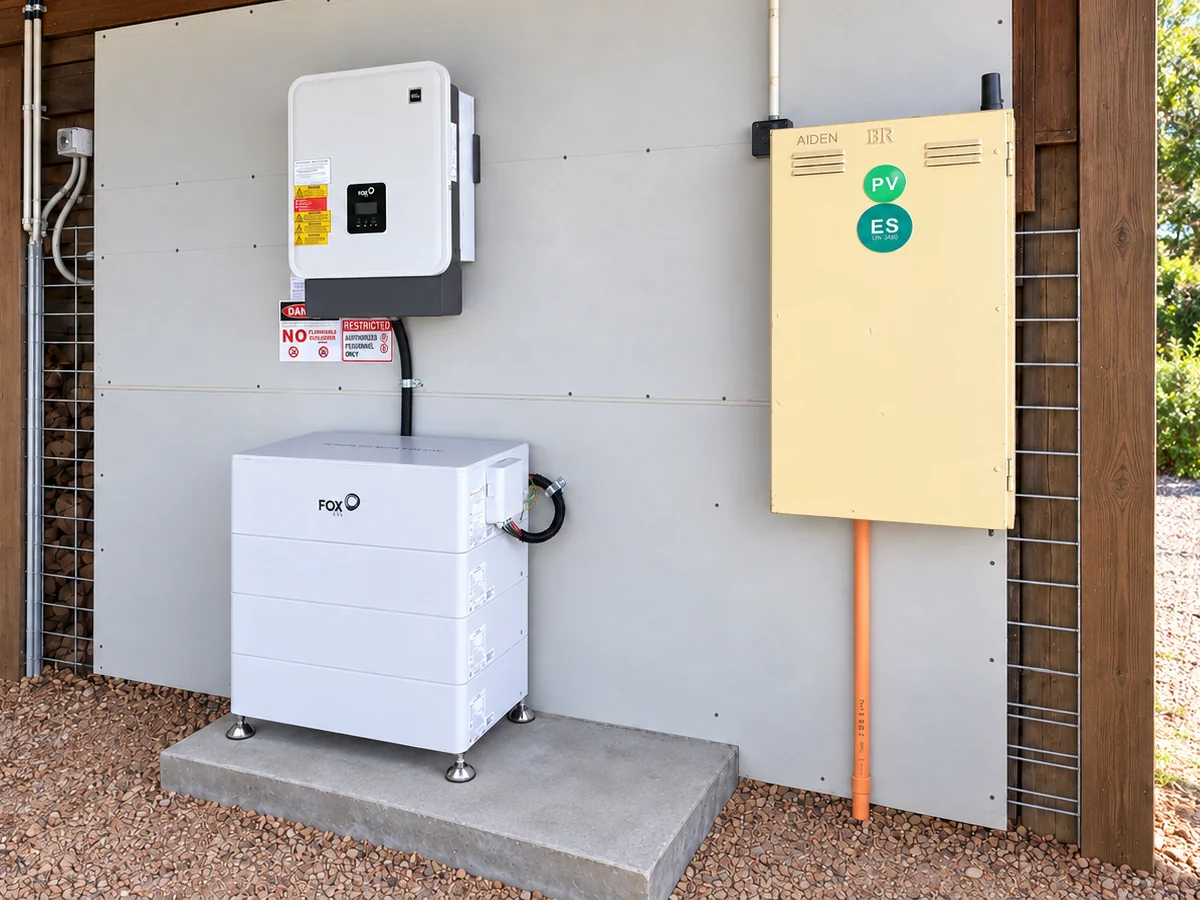
From an installation: The challenge in this protected service area was to position the equipment with suitable access, a raised base and protective backing. Separating the inverter and battery gave us options when planning the space. This is an individual site solution, not approval to install in any similar-looking location.
See garage layouts, project photos and clearance details
At approximately 28 to 30 kWh, the Fox ESS battery occupies substantially less overall space in the compared layouts: its plug-and-play modules form one concentrated stack, while six SOFAR modules require two three-module towers. SOFAR’s approximately 170 mm tower depth can still help beside a parked car, but slim depth does not mean the complete installation is smaller.
Depth, width and height matter in different ways. Compare the complete installed footprint, including vehicle protection and service access.
Where the slim SOFAR design helps
The approximately 170 mm depth of the compared SOFAR battery is a useful advantage in a tight garage. Preserving car-door opening space can matter more than placing every battery module in one tower.
The trade-off is tower count. In our compared PowerAll layout, each tower holds up to three modules. Module four starts a second tower; six modules occupy two three-module towers. Side-by-side or approved back-to-back arrangements may work well, but must be assessed with the complete installation dimensions.
Where a separate Fox ESS inverter helps
Fox ESS’s separate inverter gives us another layout option: beside the battery instead of directly above it. That can help under a restricted wall height or where an opening limits the usable area. The integrated, inverter-on-top SOFAR single-phase package shown here has a different height profile. Other SOFAR systems use different arrangements.
Clearances and vehicle protection are part of the footprint
Do not assume that everything must be absent within a generic “600 mm each side and 900 mm above” rectangle. Rules for openings into habitable rooms, non-combustible barriers and unrelated appliances have different purposes and conditions. Equipment ventilation and service clearances also come from the exact manufacturer’s manual.
In a garage, protection must address the actual vehicle-contact risk. Bollards may be required, but their number and position are site-specific; their presence alone does not establish adequate protection. We consider the car’s path and doors as well as the equipment. ERAC battery-location guidance.
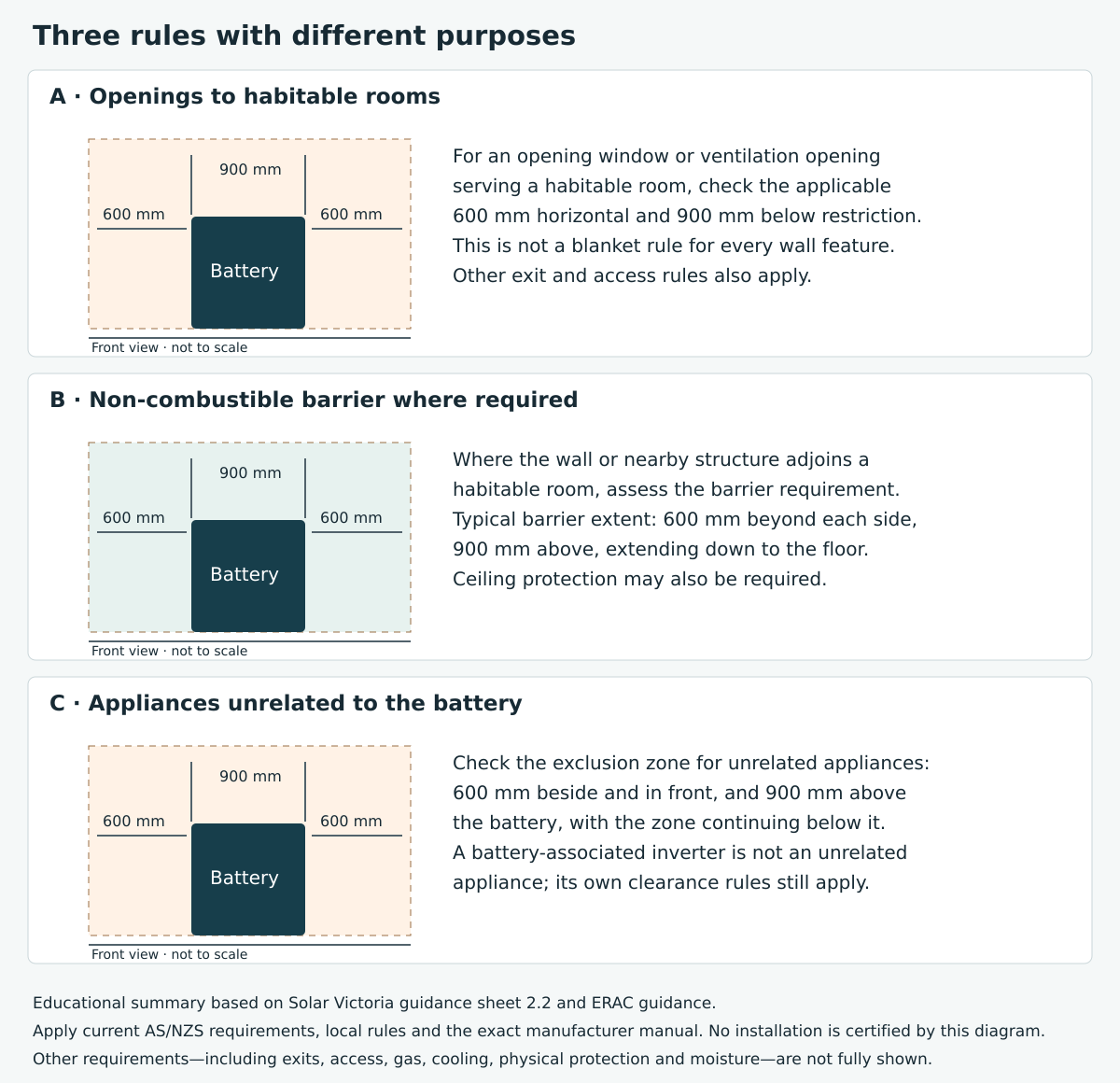
Installation must meet applicable Australian requirements, including AS/NZS 5139 and AS/NZS 3000, together with the relevant inverter-connection requirements and manufacturer instructions. Neither a photograph nor this introductory diagram certifies an installation.
Do you need to run more appliances at once?
Fox ESS offers more inverter-power choices in our single-phase packages, including 5, 8 and 10 kW. The SOFAR PowerAll packages compared here use a approximately 5 kW ESI-series inverter; higher-power and three-phase SOFAR products use different equipment and layouts, with the inverter installed separately.
Understand battery size, inverter power and backup
Battery capacity is measured in kWh; inverter power is measured in kW. Capacity is how much energy can be stored. Power is how quickly the system can deliver it. A 30 kWh battery connected to a 5 kW inverter does not provide 30 kW to the house.
Our Fox ESS options include 5, 8 and 10 kW single-phase choices, with suitable three-phase families offering higher ratings, including up to 30 kW in the H3 Pro range. The SOFAR PowerAll packages being compared use the 5/6 kW single-phase family. Those are package choices, not a claim that SOFAR makes no larger inverters. Fox ESS inverter families; SOFAR’s broader product range.
Power, phases, export limits and backup are different constraints
Actual output is limited by the inverter, battery configuration, operating conditions and site approvals. Some smaller battery configurations cannot sustain the inverter’s full rating. Three-phase supply does not automatically mean every phase has identical backup capability.
Backup must be designed and quoted. Confirm which circuits remain powered, continuous and starting-load limits, backup reserve, changeover arrangement and whether existing solar can recharge the battery during an outage. AC coupling alone does not establish that an existing solar inverter will operate during a blackout. “Whole-home backup” should never be inferred from battery size.
Moving from single-phase to three-phase also changes protection, metering and wiring requirements. It is not universally a case of swapping only the inverter, for either brand.
How much can you charge during a short grid-charging window?
If you use a three or four-hour free or low-cost electricity window, inverter power can determine how much energy you capture. A 10 kW Fox ESS inverter can potentially charge substantially more during that limited period than the approximately 5 kW SOFAR PowerAll inverter compared here.
See the theoretical charging comparison and practical limits
Before losses and system limits, 10 kW sustained for three hours represents up to 30 kWh; 5 kW represents 15 kWh and 6 kW represents 18 kWh. Over four hours, the corresponding theoretical figures are 40, 20 and 24 kWh. This means a suitable 10 kW Fox ESS configuration may replenish most or all of an approximately 28 kWh battery within a short tariff window, even when solar production is low.
These are simple power multiplied by time examples, not charging guarantees. Actual energy depends on state of charge, usable capacity, battery charge limits, inverter settings, temperature, conversion losses, household consumption and the terms of the customer’s electricity plan. Availability and conditions of free or low-cost periods depend on the retailer and tariff.
Will there be enough room in your switchboard?
In our standard single-phase retrofits, Fox ESS can fit with one spare circuit-breaker position; SOFAR typically needs about three or four because it adds more metering equipment. Solar on another switchboard, or more than one solar inverter, can also make a compatible Fox ESS design more practical.
See the actual CT, inline meter and wiring differences
The one-position versus three-to-four-position example describes the standard single-phase retrofits our team is comparing. It is not a promise that every switchboard will fit those counts. Backup, isolation, circuit protection, metering choices and the condition of the existing board can change the space required.
For a straightforward retrofit, both brands may be suitable. For solar on another switchboard, several solar inverters or very limited board space, confirm the metering design before choosing on price.
DC-coupled means the solar panels connect directly to the hybrid inverter that manages the battery. AC-coupled, in the retrofit discussed here, means the existing solar inverter stays and the battery system is added on the AC side. The household can therefore keep its existing solar equipment where compatible.
Grid measurement versus solar-production measurement
A grid CT—a small current-transformer clamp—helps the battery system determine whether the property is importing or exporting electricity. Compatible Fox ESS single-phase retrofit designs can use that grid measurement to control charging and discharging without a separate solar-production reading. An additional supported PV measurement can make the app’s solar-generation display more complete.
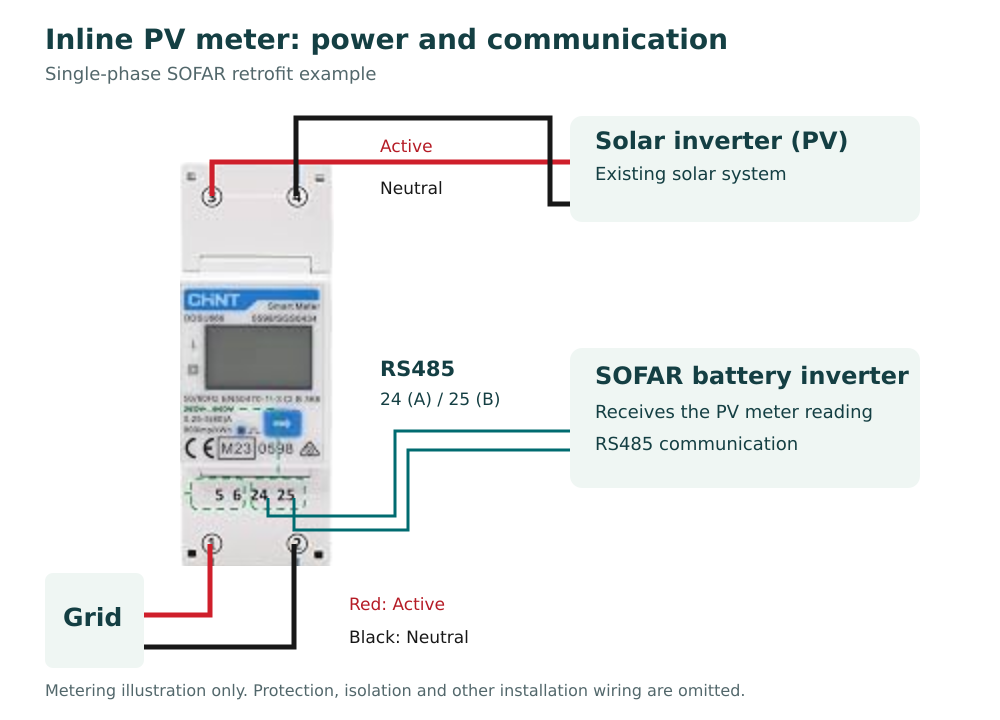
In the SOFAR PowerAll AC-coupled arrangements our team has used, the design also includes PV metering. The inline meter illustrated below occupies switchboard rail space and has the measured circuit passing through it. That is different from fitting a clamp around an existing conductor.
This is configuration-specific. Meter hardware, firmware and supported topologies vary. SOFAR documentation also describes CT-based measurement options; it would be misleading to say every SOFAR system always requires the same inline PV meter. We confirm the exact Australian installation arrangement before quoting.
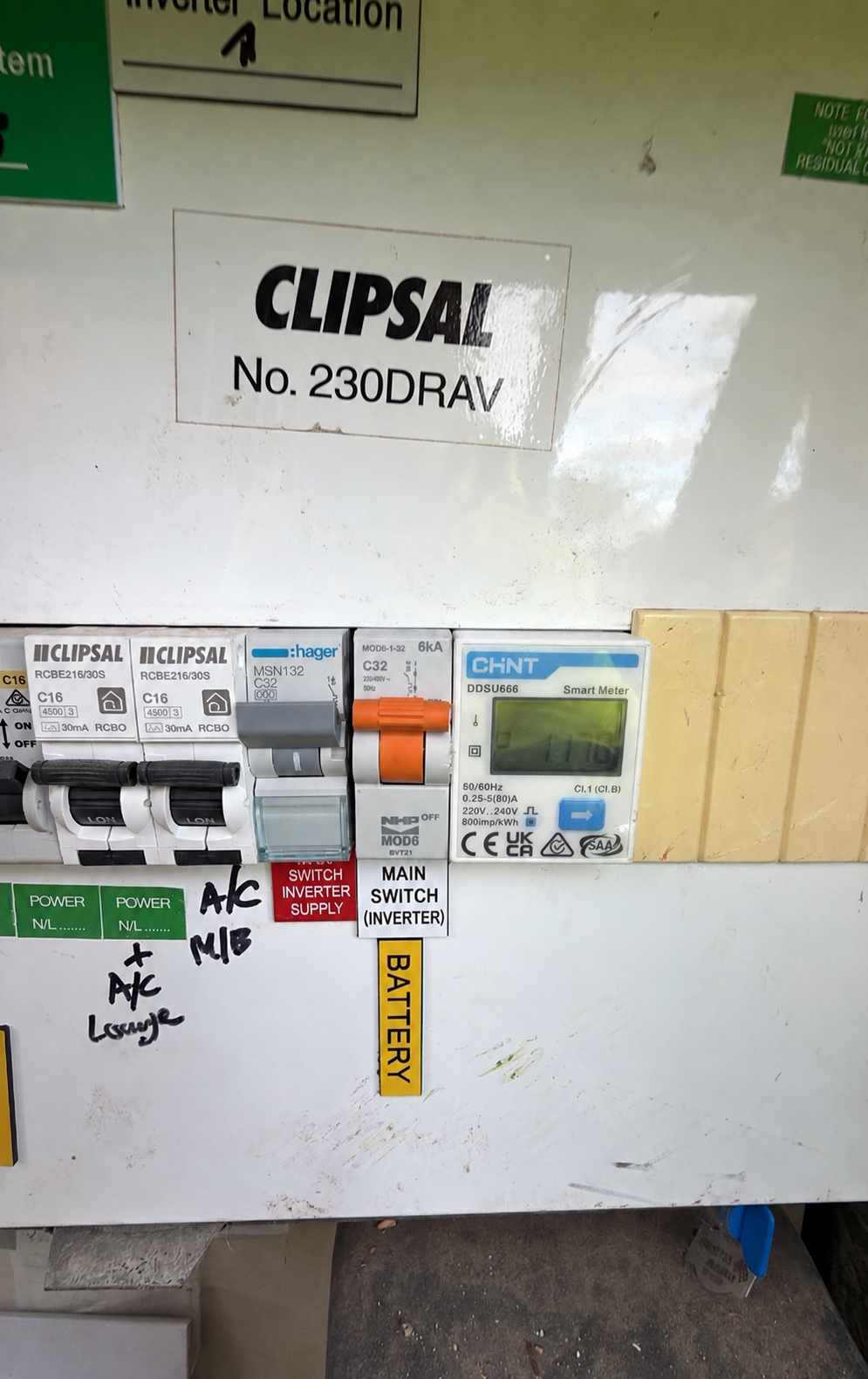
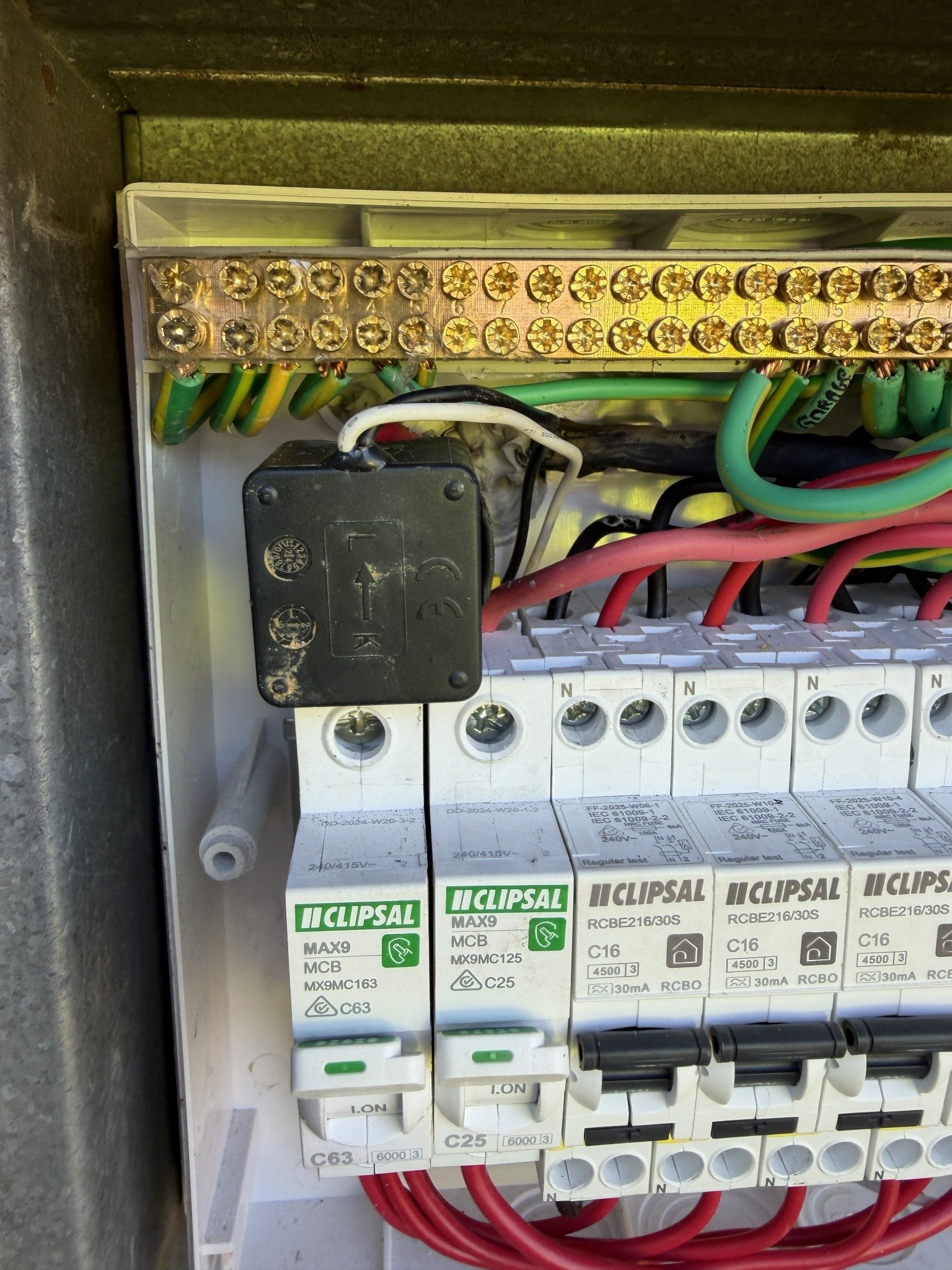
In a compatible Fox ESS single-phase retrofit, grid measurement can control battery charging and discharging. A supported additional PV measurement is used when a separate solar-production reading is wanted in the app.
Why separate switchboards or multiple solar inverters need extra attention
A common regional-property layout has solar connected at a shed sub-board, while the proposed battery connects at the main board. If the battery design needs a separate PV measurement and communication path, creating that path may be impractical—not simply a little more expensive. A compatible grid-measurement-led Fox ESS design, or another suitable system, may be a better starting point.
Multiple solar inverters need their combined generation accounted for correctly where PV metering is required. An inline meter is not inherently restricted to one inverter: an approved, correctly rated common measurement point may be possible. But separate feeders, boards or phases can prevent a simple arrangement.
Nor does “only one spare slot” guarantee a Fox ESS installation will fit. Circuit protection, isolation, backup equipment, metering and local requirements determine the space needed. Our preference is to assess photographs of the board fronts, inverter labels and proposed battery location first. Homeowners should not remove covers or access live wiring.
Reference for the distinction between meter and CT options: SOFAR ESI 3–6K-S1 manual, V4.3, metering sections. This European-hosted manual is supporting context, not a substitute for the Australian instructions for the supplied hardware.
Why is Fox ESS simpler to assemble?
Fox ESS’s battery modules connect as they stack, reducing the connections made on site. SOFAR also stacks, but needs more separate cables and fixings between modules, so careful installation takes more work. Fox ESS’s plug-and-play module design, fewer on-site battery connections and more integrated hardware contribute to the premium installation and ownership experience.
See the connectors, cabling and installation checks
Both systems are physically stackable. The difference is how the compared modules connect. Fox ESS’s integrated stacking connections reduce inter-module work on site. SOFAR’s compared design uses more external leads and individually fitted connections.
On SOFAR BTS 5K installations, DC positive and negative connections, communication links and protective earthing are completed as part of the installation. Brackets, fixings and covers also need attention. Stacking the housings is only one part of that process.
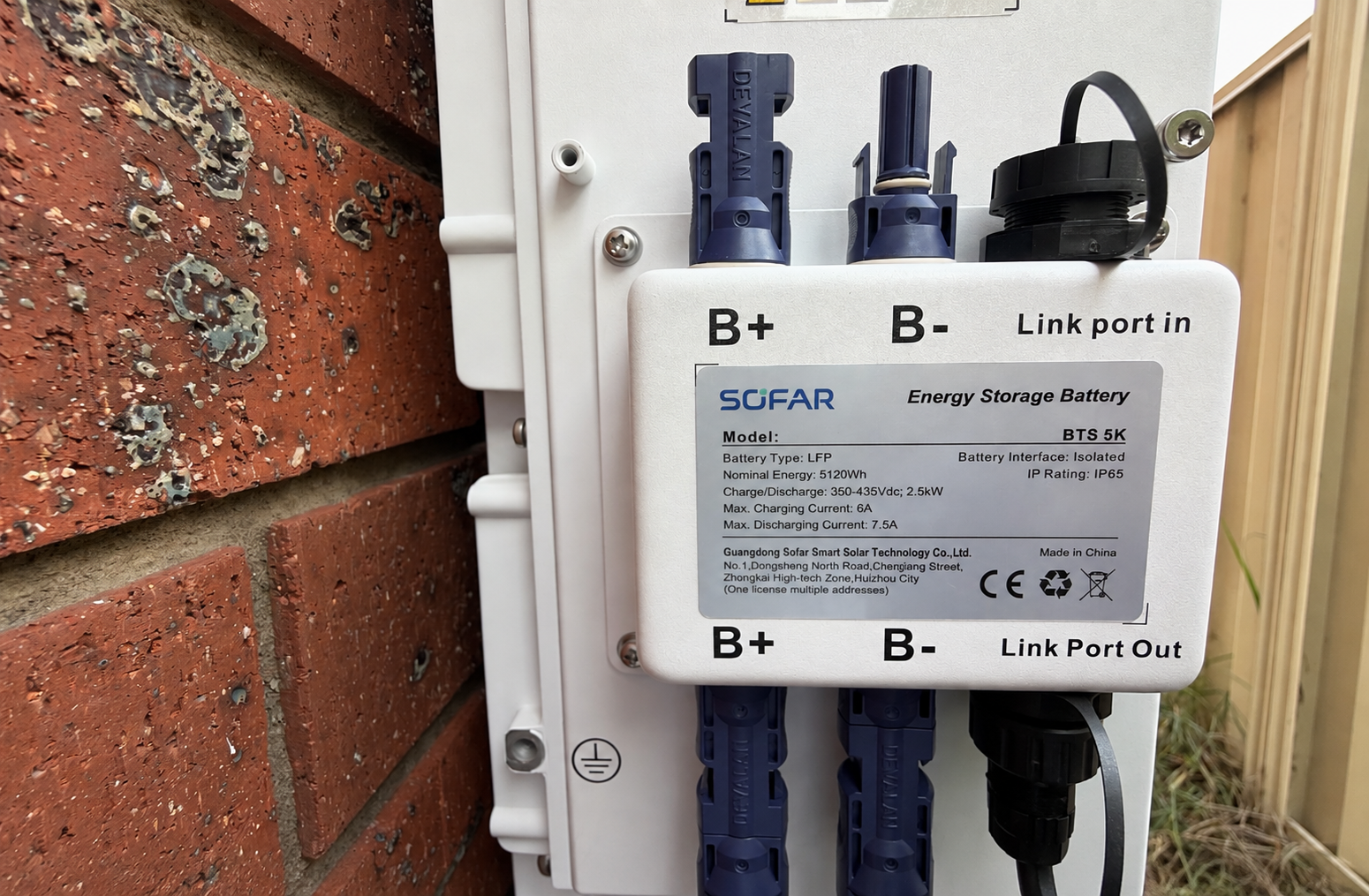
The compared Fox ESS modules use integrated mating connectors—often described as blind-mate or plug-and-play inter-module connections. This simplifies the work between modules. External battery-to-inverter wiring, protective earthing where specified, anchoring, protection and commissioning still remain. It is not a DIY system.
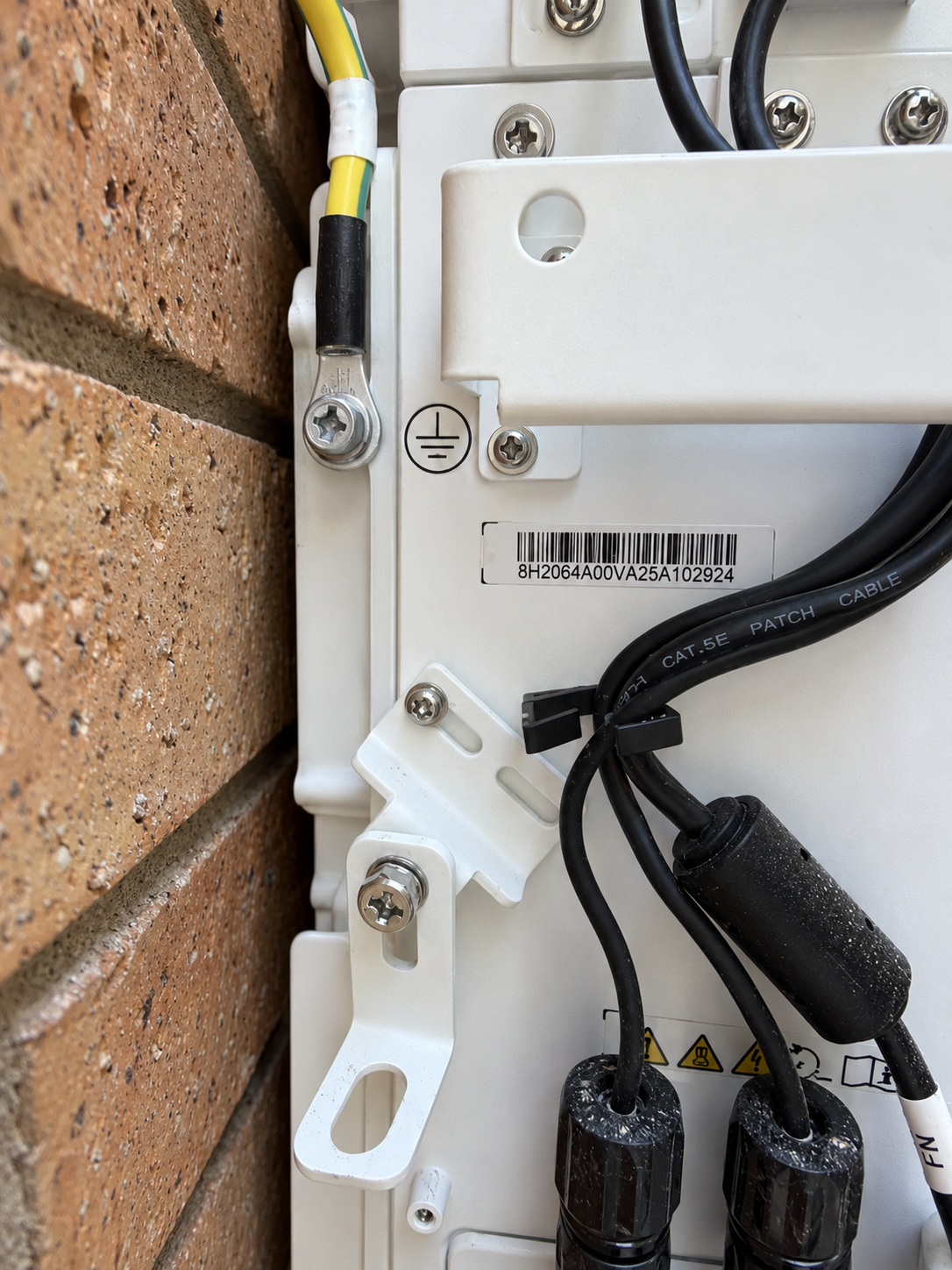
Does more site wiring mean lower quality or reliability?
Fox ESS concentrates more inter-module integration in the product; SOFAR’s compared design places more connection work in the installation process. Both are finished products designed for professional installation. The distinction is where the inter-module connection work happens.
In our installation experience, the SOFAR assembly and interconnection stage can take substantially longer; on some comparable jobs it has taken roughly twice as long. This is our field observation, not a controlled labour-time benchmark or a prediction for every job.
More installer-made interfaces mean more items to check for correct seating, specified tightening, cable support, seals and protective-earth continuity. However, connector count alone does not prove a higher failure rate, worse vibration performance or a lower IP rating. Factory-integrated connectors can also fail if damaged or installed incorrectly.
With either brand, we check the required connections and fixings and complete the applicable tests. SOFAR’s additional site assembly makes familiarity with that system particularly useful. Neither brand compensates for poor installation.
Which app is easier to live with?
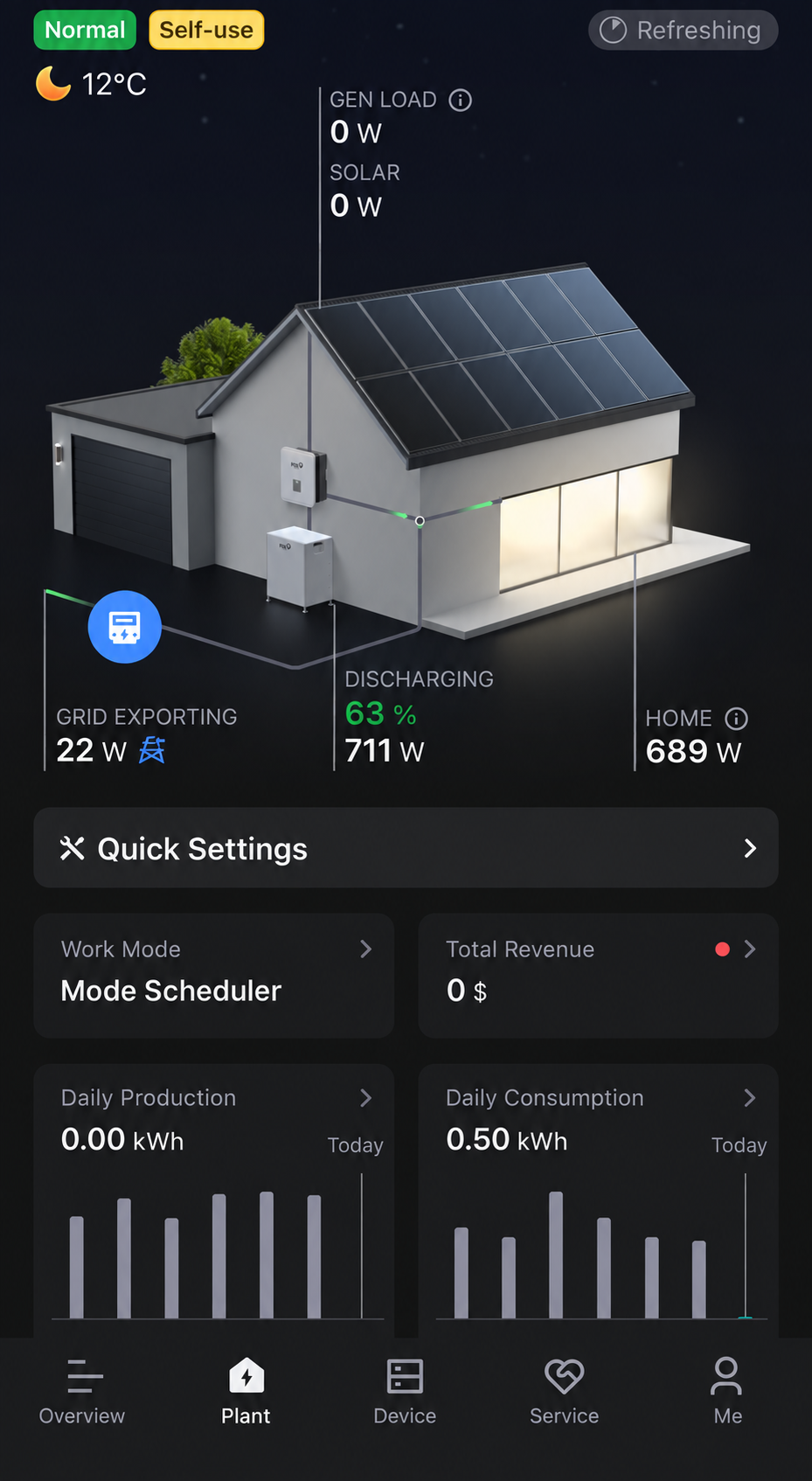
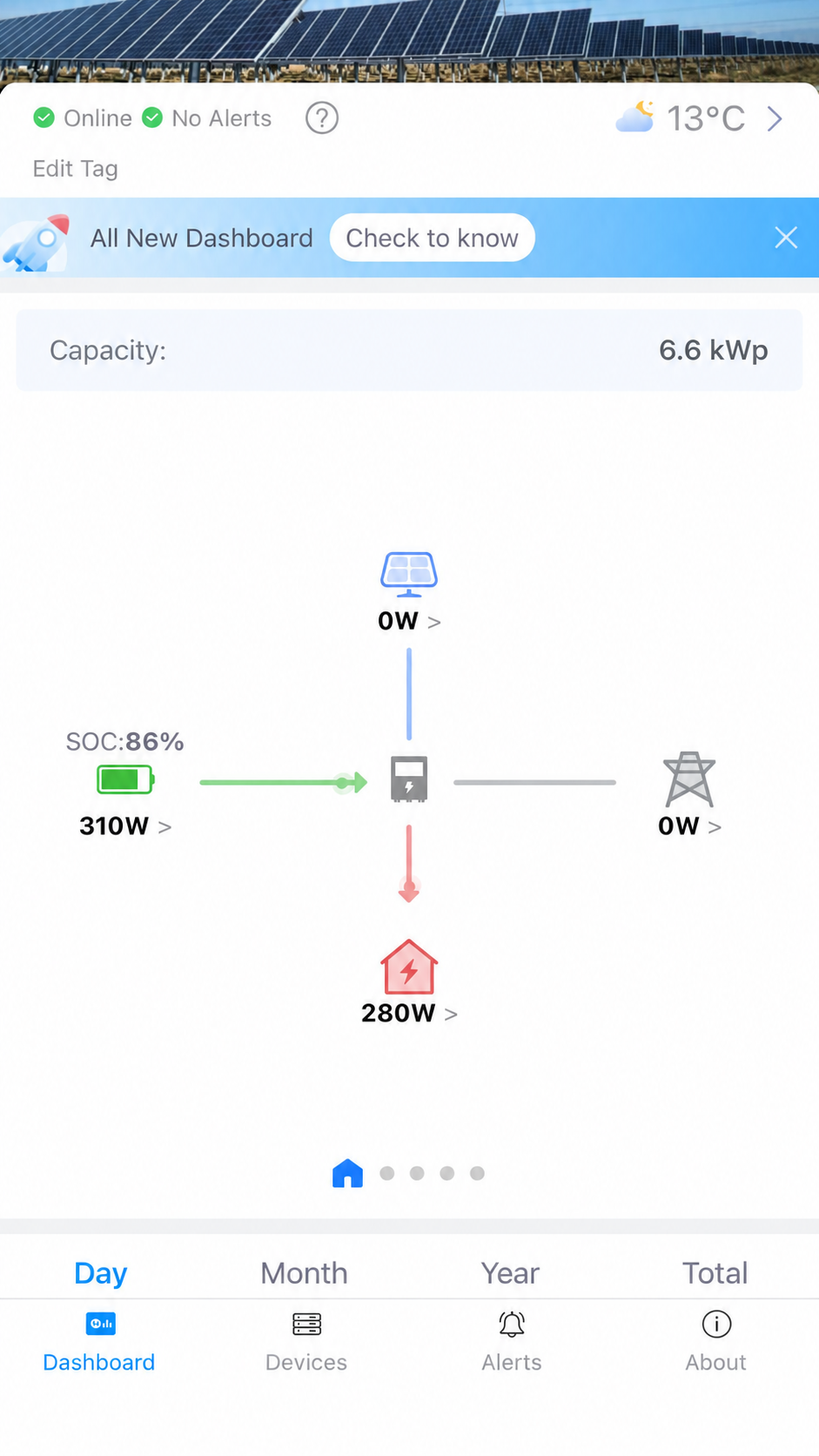
Fox ESS uses FoxCloud; the SOFAR PowerAll systems discussed here are commissioned and monitored through SOLARMAN. Our team prefers the Fox ESS experience for setup, monitoring, remote support and troubleshooting.
Read about apps, local controls and remote support
The Fox ESS systems discussed here use FoxCloud. The SOFAR PowerAll systems our team currently installs in Australia are generally commissioned and monitored through SOLARMAN. Although SOFAR also has a SOFAR Cloud application, SOFAR support has directed our team to use SOLARMAN for the configurations discussed in this article.
SOLARMAN is a monitoring platform used by several equipment brands rather than software developed exclusively for SOFAR. It provides essential monitoring, but in our field experience it is less integrated and less straightforward than the Fox ESS monitoring and support environment.
The local display on the SOFAR inverter is useful: homeowners and installers can view power flow, battery status, household load and basic information without opening an app. On systems we have supported, however, some important settings and detailed event or fault information have only been accessible through that screen. In those cases, a remote change was not available and an installer had to attend the property.
Apps, firmware and support procedures can change. These observations describe the configurations commonly supplied and installed by our team in Australia as at 16 September 2026; they are not a claim that every SOFAR model or future installation will use the same platform or have the same remote-access limitations. FoxCloud information.
Should you buy more capacity now or expand later?
The rebate becomes less generous on the additional capacity in larger batteries. A later expansion may not qualify for another rebate, so it is worth planning the right size from the start.
Read the rebate tiers and sizing guidance
The federal incentive tapers as usable capacity increases, and a later expansion does not automatically attract another rebate. This matters when comparing a larger purchase now with a staged upgrade.
Under the rules applying from 1 May 2026, the STC factor is applied at 100% to the first 14 kWh of usable capacity, 60% to the portion above 14 through 28 kWh, and 15% to the portion above 28 through 50 kWh. These are percentages of the certificate factor—not percentages refunded from the invoice. No STCs are awarded for capacity above the 50 kWh usable-capacity claim limit. Clean Energy Regulator rebate changes.
The CER states that additional batteries are not eligible for another STC claim after the first claim at the premises. Limited eligibility exists for expanding a system that has not previously claimed STCs, subject to the rules. Do not price a future upgrade on the assumption of a second discount. Current CER battery eligibility.
What size is likely to be useful?
We look at when you use electricity, available solar surplus or other permitted charging opportunities, tariffs, reserve requirements and foreseeable changes. A nominal 30 kWh battery can be valuable for a household that regularly uses that storage. It can also be unnecessarily large for a household that rarely cycles it.
The extra capacity above a rebate tier can still be worth buying if it serves a real need. Conversely, a discount does not make unused capacity economical. Bill savings and payback need a site-specific estimate rather than a blanket promise.
Which battery fits your priorities?
Three short steps. Get a personalised starting point, with no email required. Choose “Not sure” whenever you need help.
How the check works
This is a buying-suitability check, not a product-quality comparison. Fox ESS and SOFAR occupy different buying categories in our recommendation. The points show how your answers fit each route; they are not percentages, quality scores, rebate decisions or electrical approval. Answers are processed on this page and are not sent to a server.
Fox ESS is the default recommendation when the additional cost is affordable. SOFAR can become the budget-fit recommendation only when you identify upfront budget as the deciding constraint and the approximately 30 kWh, approximately 5 kW package appears suitable for your needs and property.
Property or electrical constraints still require a technical assessment. If budget or suitability is uncertain, the result asks you to compare the complete designs with our installation team. Both package enquiry links remain available.
Our general recommendation: choose Fox ESS when the price difference is affordable because its quality, modular design, installation experience, expansion and ownership experience justify the premium. Choose SOFAR when budget is the deciding constraint and approximately 30 kWh with approximately 5 kW is suitable; in that situation, it can make battery ownership possible rather than postponing it altogether.
Our recommendation: Fox ESS when affordable, SOFAR when budget is the constraint
Fox ESS is our recommended long-term choice when the price difference is within budget. Its quality, modular plug-and-play design, factory-completed assembly, fewer on-site battery connections, faster and simpler installation, greater expansion, higher inverter-power options and more refined app and support experience make the additional cost worthwhile.
SOFAR is our budget-friendly high-capacity choice—not a direct substitute in the same product class. It is for households whose budget may otherwise prevent them from installing a battery. When approximately 30 kWh of storage, approximately 5 kW inverter power and the installation layout suit the property, $3,500 represents excellent capacity for the money. In that situation, installing a suitable SOFAR system can be better than having no home battery at all.
Not sure which package fits your home?
We offer a free consultation and free site inspection. Our team can assess your existing solar, switchboard, installation space and budget, then explain the suitable options.
Compare the complete quote, not only the battery badge
Before accepting, confirm usable storage, sustained charge/discharge power, exact model numbers, backup scope, installation extras, monitoring hardware and any ongoing platform or VPP conditions. Compare the written warranties: duration, retained-capacity or throughput conditions, exclusions, registration and responsibility for labour and freight. A matching “10-year” headline, where offered, is not proof of identical cover.
Ask for the approved expansion path in writing if future growth matters. For unusual sites, ask how access, service clearances, protection, moisture and the building layout have been assessed.
Fox ESS vs SOFAR: common buyer questions
Quick answers to the questions Australian homeowners commonly ask when comparing Fox ESS and SOFAR batteries.
Fox ESS or SOFAR: which should an Australian homeowner choose?
If the price difference is affordable, Maxim Energy recommends Fox ESS as the stronger long-term system because of its product quality, modular plug-and-play design, simpler installation, expansion options, higher inverter-power choices and ownership experience. If a limited budget would otherwise prevent the household from installing a battery, SOFAR can be the better budget-fit when approximately 30 kWh of storage and approximately 5 kW inverter power suit the home.
Is Fox ESS worth the extra cost over SOFAR?
Yes, when the additional cost is within your budget and you value a more integrated system, easier installation, greater expansion headroom, higher-power inverter options and our preferred app and support experience. The premium is not only for the brand name; it pays for practical product, installation and ownership advantages.
Is SOFAR a good home battery when the budget is limited?
It can be. SOFAR is our budget-friendly high-capacity option for households that want substantial storage at the lowest upfront price in this comparison. The $3,500 package can provide approximately 30 kWh of nominal storage with approximately 5 kW inverter power under eligible standard-installation conditions. The home, existing solar, switchboard, available space and power requirements must still be assessed before it is recommended.
What is the best-value approximately 30 kWh home battery in Victoria?
Among the Maxim Energy packages compared in this guide, SOFAR provides the strongest capacity-per-dollar proposition: approximately 30 kWh for $3,500 under eligible standard-installation conditions. That makes it our budget-value choice, not our strongest overall system. Fox ESS remains our preferred long-term recommendation when the higher price is affordable.
Is SOFAR cheaper because it is lower quality?
Price alone cannot establish quality. The compared systems differ in integration, installation work and features. We do not have evidence that isolates the manufacturers’ production costs or proves that the lower-priced package uses inferior cells.
Can SOFAR be expanded in 5 kWh steps?
The compared BTS 5K system expands in nominal 5.12 kWh module steps, within the supported inverter and tower limits. It is not limited to 30 kWh increments.
Can a 5 kW Fox ESS system expand to 98 kWh?
Do not assume so. The Australian CQ7 compatibility list checked for this guide gives the listed H1 and KH single-phase series a 48.72 kWh maximum. The wider battery family’s headline maximum is not the limit of every compatible inverter.
Which battery takes less garage space?
SOFAR’s slim depth may preserve car-door clearance. Fox ESS may concentrate more storage in one supported tower. Compare the complete installed width, depth and height, including protection and required access.
Can either brand work with my existing solar?
Potentially. The existing inverter, electrical topology, metering and backup requirements must be checked. Multiple solar inverters or separate switchboards make that assessment particularly important.
Will adding modules later require more wiring?
Sometimes. A planned Fox ESS expansion may retain the existing inverter and AC circuit, but compatibility, tower limits and the required cables, protection and commissioning must still be checked. A SOFAR expansion beyond the selected six-module inverter limit needs another system arrangement.
Does a larger battery guarantee lower bills?
No. Savings depend on useful charging and discharging, tariffs, household demand, operating losses and settings. The best-value capacity is the capacity the household can use effectively.