
Can You Add More Battery Capacity to an Existing Solar System? A GoodWe and NeoVolt Case Study
How to add, retrofit or expand battery storage in an existing solar system—and what this real GoodWe and NeoVolt installation shows about compatibility, planning and professional assessment.
Quick answer
Yes, a battery can often be added to an existing solar system, and an existing battery system may sometimes be expanded. The correct method depends on the inverter type, approved battery compatibility, capacity limits, equipment generation, firmware, backup design and future expansion requirements.
What went wrong?
- An existing 5 kW hybrid inverter was not fully assessed before additional equipment was sold.
- A second inverter and approximately 10 kWh of battery storage were installed as a separate system.
- A later request for more storage resulted in a third inverter and approximately 20 kWh of additional batteries.
- Different inverter and battery generations could not communicate in the intended configuration.
- The homeowner was left with a more complex system to monitor, maintain and troubleshoot.
The market problem: selling first, designing later
Adding a battery to an existing solar system should begin with one question: what equipment is already installed, and how can it be used properly?
In this real Victorian case, the homeowner wanted battery storage and later increased the target to approximately 30 kWh. Instead of assessing and designing the complete system first, additional inverter-and-battery packages were progressively installed.
The property ultimately ended up with three separate 5 kW inverters, different equipment generations that could not communicate as intended, equipment replacement, repeated site visits and a system far more complicated than the original goal required.
Four ways to add battery capacity to an existing solar system
There is no single upgrade method that suits every property. A qualified assessment should compare the complete cost, compatibility and long-term operation of these pathways before equipment is sold.
1. Connect a compatible battery to the existing hybrid inverter
If the existing inverter is hybrid and the proposed battery is officially supported, battery storage may be added without installing another inverter.
2. Expand the existing modular battery system
Where the inverter, battery management system and manufacturer rules allow it, compatible modules may be added to increase the existing battery capacity. Model, generation, state of health, firmware and commissioning requirements must be checked.
3. Add an AC-coupled battery system
A separate battery inverter can operate alongside an existing solar inverter. This can be appropriate for a solar-only inverter, but it introduces additional equipment and must be designed as one coordinated site system. The Australian Government explains the distinction between AC-coupled and DC-coupled battery integration.
4. Replace unsuitable equipment with one integrated system
If the existing equipment is old, unsupported, incompatible or unable to meet the customer’s future needs, a properly sized integrated replacement may provide simpler monitoring, maintenance and expansion than multiple independent systems.
The equipment that already existed
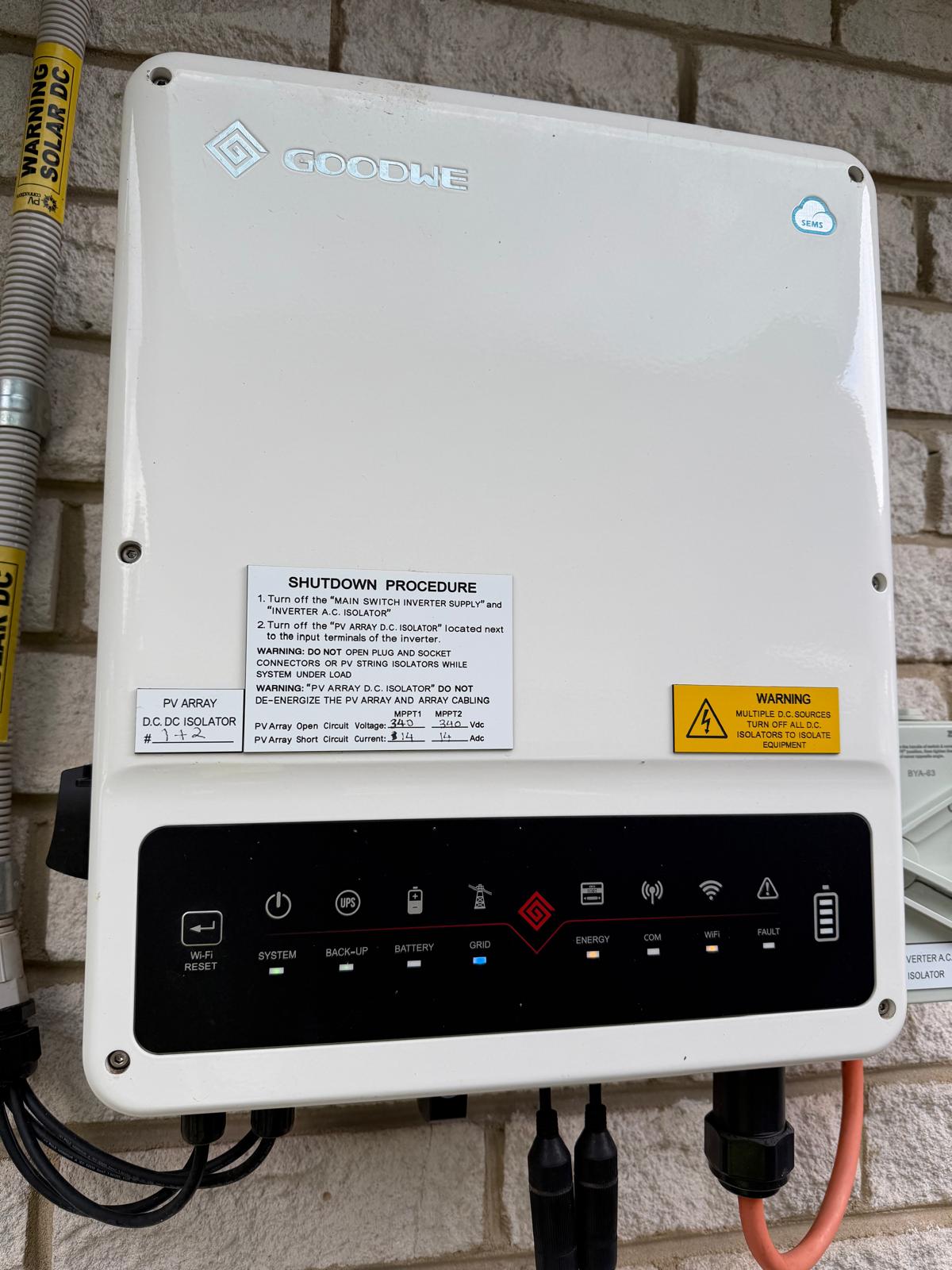
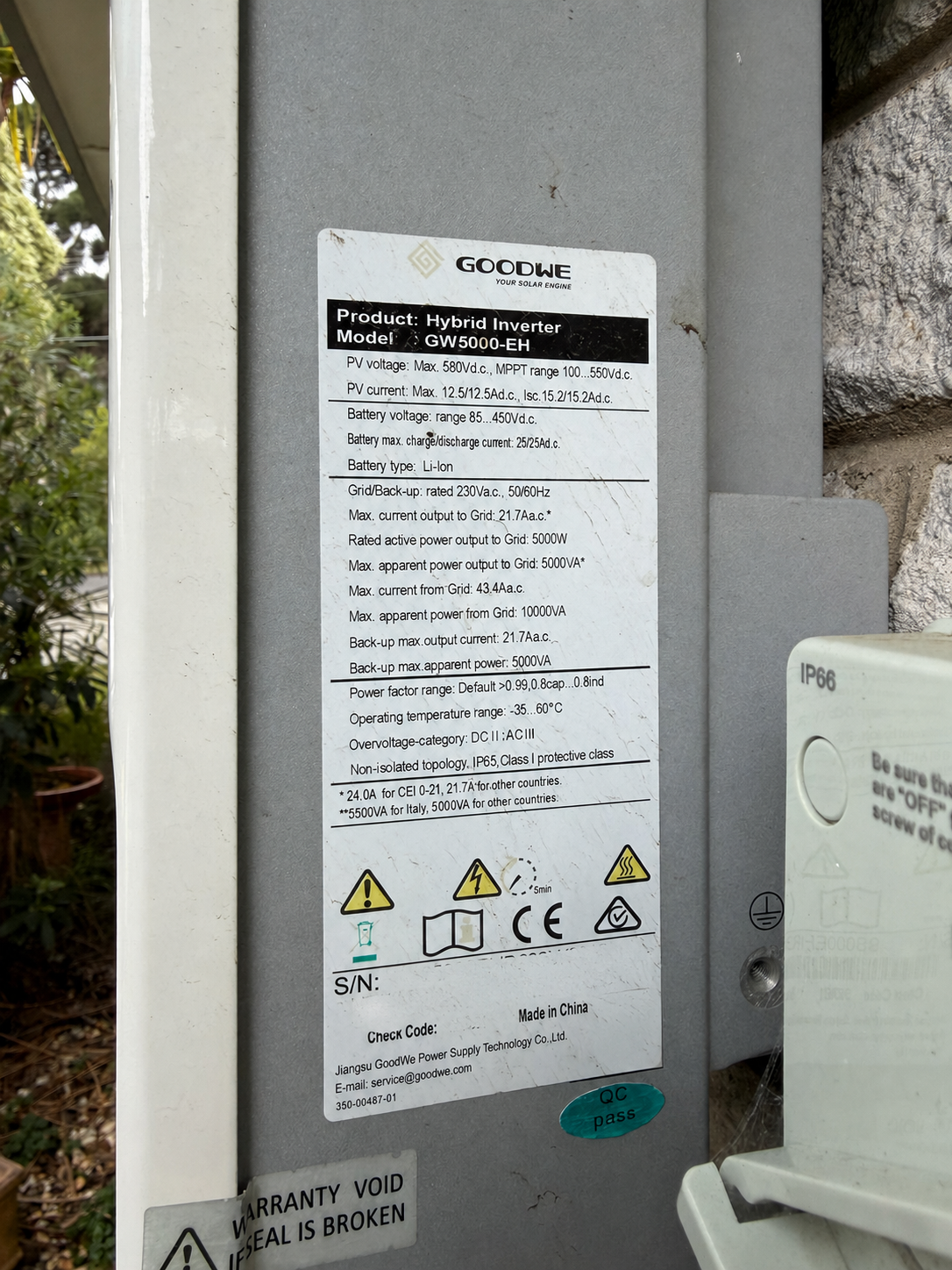
The property originally had a 5 kW hybrid solar inverter. A hybrid inverter is designed to manage solar generation and a compatible battery. It does not mean every battery can connect, but its battery capability should be investigated before another inverter is recommended.
The assessment should have confirmed the exact model, approved battery compatibility, available capacity, firmware requirements, backup design, switchboard capacity and the customer’s future expansion plans.
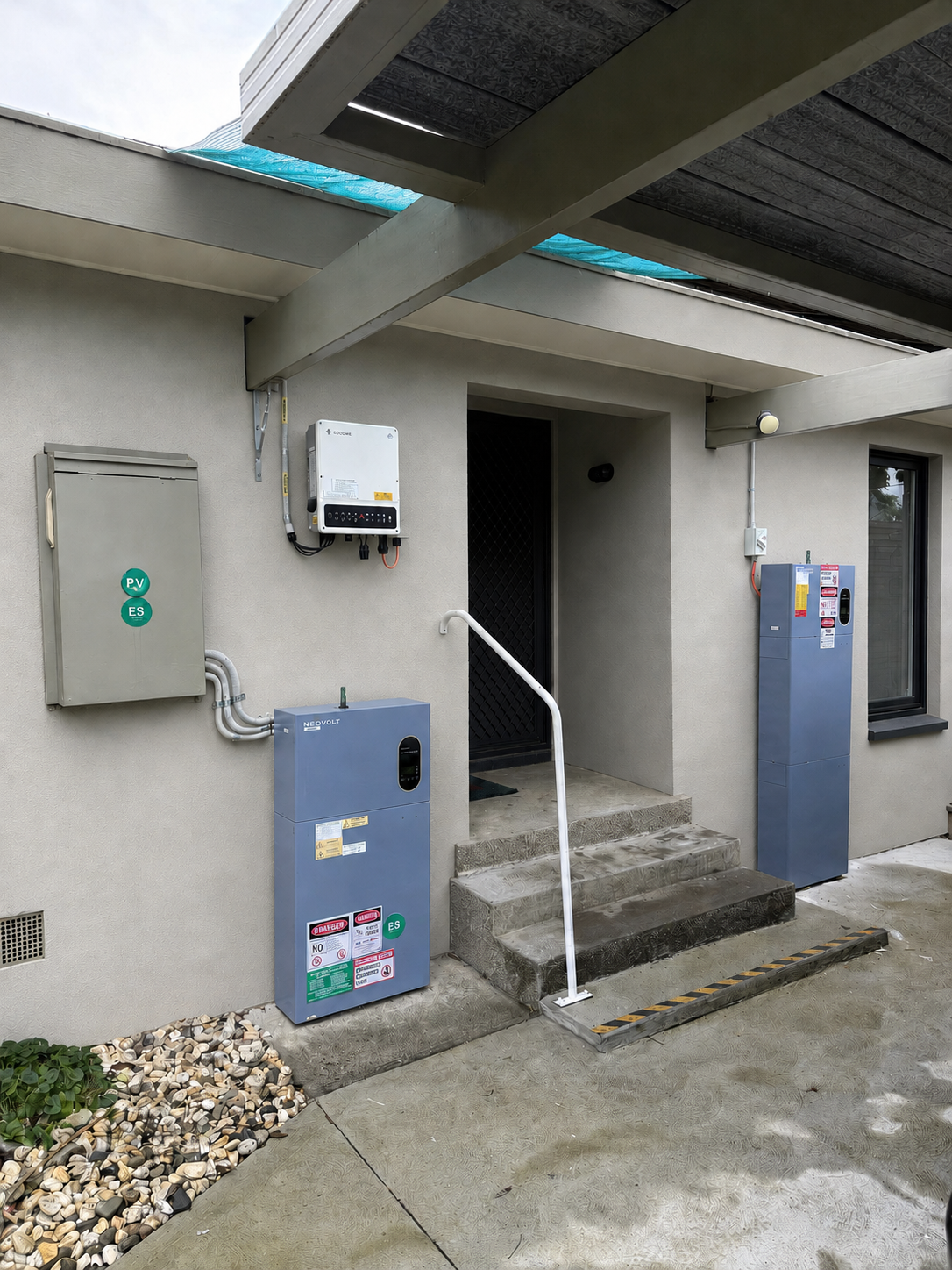
GoodWe and NeoVolt equipment observed at this property
The existing solar installation used a GoodWe 5 kW hybrid inverter. When battery storage was requested, its battery capability and current approved compatibility options should have been investigated before another inverter-based package was recommended. GoodWe publishes a model-specific Battery Compatibility Overview, demonstrating why the exact inverter and battery pairing must be checked.
The later battery installations used NeoVolt inverters and battery modules. Before increasing the NeoVolt battery capacity, the existing inverter limit, primary and secondary battery configuration, equipment generation, firmware and communication requirements should have been verified.
How one upgrade became three systems
Stage 1: the first battery request
A separate system was installed, adding a second 5 kW inverter and approximately 10 kWh of battery storage. Separate battery inverters can be appropriate, but the customer should be told why the existing hybrid cannot be used and how future expansion will work.
Stage 2: another 20 kWh was requested
When the customer wanted more capacity, the first battery system already had a 5 kW inverter. Before supplying another complete system, it should have been established whether two additional compatible battery modules could be added to that inverter.
Instead, a third 5 kW inverter and approximately 20 kWh of additional batteries were supplied as another separate system.
| System | Inverter | Connected equipment |
|---|---|---|
| Original solar system | 5 kW hybrid | Solar panels only |
| First battery system | Second 5 kW | Approx. 10 kWh battery |
| Later battery system | Third 5 kW | Approx. 20 kWh battery |
The customer needed more battery capacity—not necessarily more inverters.
The complete 30 kWh objective should have been assessed as one coordinated design before another independent system was sold.
The compatibility problem
The inverter supplied with the later battery system was from a different version or generation from the inverter used with the first system. The two battery inverters could not communicate in the intended configuration.
The newer inverter was removed and replaced with another unit intended to match the earlier inverter. After this change, a further issue was identified: the earlier and newer battery modules were also from different versions or generations. Support advice indicated that the two battery groups could not be linked as proposed.
Changing one inverter therefore did not resolve the whole problem. Inverter compatibility, battery generation, firmware and communication requirements all needed to be considered before the additional equipment was sold.
The real cost of overcomplication
- Communication: different generations may require different firmware, protocols and settings.
- Monitoring: the homeowner may need to interpret multiple systems instead of one coordinated view.
- Performance: if equipment cannot coordinate as intended, the battery capacity may not operate as expected.
- Maintenance: fault finding must cover multiple inverters, battery groups, meters, links and configurations.
- Warranty: multiple systems and equipment changes can make responsibility less clear.
- Total cost: extra inverters, duplicated electrical work, replacements and repeat visits all add cost.
Without the original quotations and full records, an exact price comparison would not be appropriate. However, unnecessary components and repeated troubleshooting could potentially have been replaced by a simpler design using higher-quality, fully compatible equipment.
The cheapest-looking package at the sales stage is not always the most economical system over its full life.
Why Maxim Energy is different
A common weakness in the market is the separation between the person selling the system and the person responsible for installing and commissioning it. A sales-only process may recommend a package without fully understanding the existing equipment, manufacturer requirements, switchboard or installation conditions.
At Maxim Energy, the sales promise is not separated from the technical reality. We begin by assessing what you already have and determining what can be safely, effectively and economically reused. The same accountable technical team assesses, recommends, installs and commissions the upgrade, so compatibility, switchboard requirements, backup design, future expansion and total system cost are considered before you commit.
If this customer had begun with a technically qualified and accountable provider, the required capacity may have been achieved with fewer inverters, better-quality compatible equipment, easier monitoring and maintenance, clearer support responsibility and potentially a lower overall cost.
The expert you speak with is the expert who installs.
Good design is not about installing the most boxes. It is about delivering the simplest compliant system that meets today’s needs and remains practical tomorrow. This direct model significantly reduces the risk of incorrect pre-sale information, unnecessary equipment, compatibility surprises and installation-day problems.
Questions to ask before accepting a battery quote
- Is my current inverter hybrid or battery-ready?
- Which batteries are officially compatible?
- Can my existing battery system be expanded?
- Why is another inverter required?
- Will every proposed inverter and battery generation communicate correctly?
- How will the complete system be monitored?
- Who is responsible for installation, commissioning, firmware and warranty support?
- Has the switchboard and backup design been inspected?
- Can I receive the complete system design in writing?
Battery upgrade compatibility FAQs
Can I add a battery to my existing hybrid inverter?
Possibly. The exact inverter model, approved battery list, firmware, battery input limits, backup design and switchboard configuration must be checked before a battery is selected.
Do I need another inverter when adding a home battery?
Not always. A compatible battery may connect to an existing hybrid inverter. A separate battery inverter can be appropriate, but the technical reason and complete operating design should be explained before purchase.
Can I add more batteries to an existing battery system?
Only when the inverter supports the additional capacity and the proposed battery modules are compatible with the existing model, generation, firmware and communication requirements.
Can different battery or inverter generations work together?
Equipment that looks similar may still use different firmware, protocols or supported configurations. Compatibility must be confirmed using current manufacturer documentation.
What problems can multiple inverter systems create?
Multiple systems can increase monitoring complexity, commissioning requirements, fault-finding time, physical equipment, maintenance work and uncertainty about support responsibility.
What should be checked before expanding a solar battery system?
Check existing inverter capability, approved battery compatibility, maximum capacity, equipment generations, firmware, switchboard limits, backup requirements, monitoring, warranty responsibility and future expansion plans.
Can I add a battery to an existing GoodWe hybrid inverter?
Potentially, but the exact GoodWe model, voltage class, current approved battery list, firmware and installation configuration must be confirmed before selecting a battery.
Which batteries are compatible with a GoodWe inverter?
Compatibility varies by inverter series and can change with product or firmware updates. Use the current manufacturer compatibility document for the exact inverter model rather than relying on a brand-level assumption.
Can I add another NeoVolt battery to my existing system?
Possibly. The NeoVolt inverter model, supported module quantity, primary and secondary battery arrangement, existing and proposed battery generations, firmware and commissioning process must all be checked.
Can older and newer NeoVolt batteries be connected together?
Do not assume they can. Similar-looking modules may have different control, communication or firmware requirements. Written confirmation for the exact models and proposed configuration should be obtained before purchase.
Planning to add more battery capacity?
Before purchasing another inverter or battery module, let Maxim Energy assess your existing solar and battery system. We check what can be reused, what is compatible and which pathway provides the simplest professional solution—not what additional equipment can be sold.