
Insights · Home battery guide · Victoria
Can a Single-Phase Battery Work in a Three-Phase Home?
Yes. A compatible single-phase battery can reduce electricity bills across a three-phase home while the grid is connected. With the right three-phase monitoring, the system can respond to the home’s combined electricity use. A three-phase supply does not automatically mean you need a three-phase battery inverter.
Backup is different: during a blackout, a single-phase system can power only the circuits connected to its backup supply. It does not provide three-phase backup.
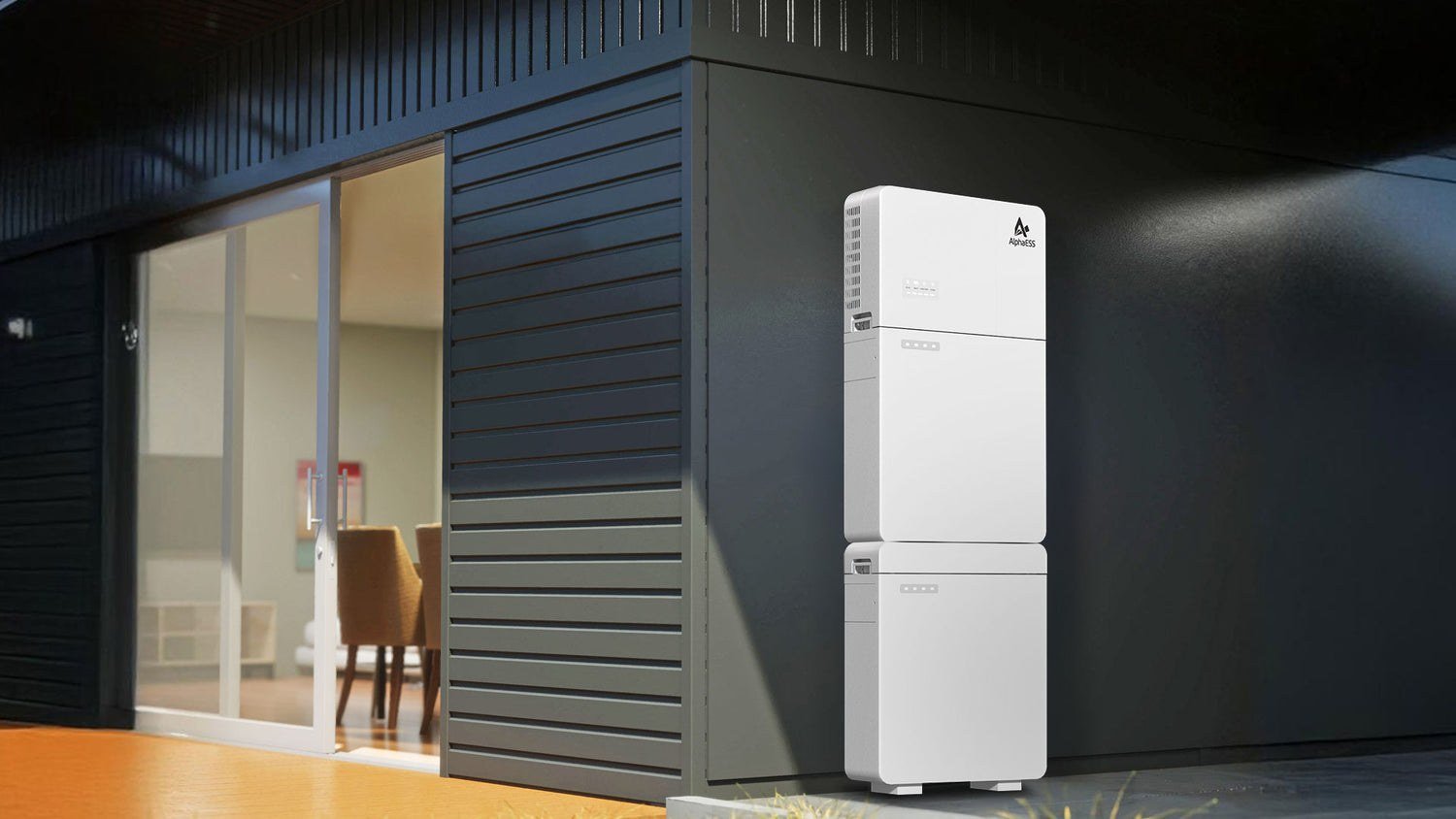
When the grid is on
A suitable single-phase system can offset the home’s combined electricity use for billing. You do not lose two-thirds of your battery capacity because the home has three phases.
When the power goes out
Only the selected circuits wired for backup stay powered, within the system’s limits. Genuine three-phase appliances need a suitable three-phase backup solution.
Jump to your question
What is the difference between single-phase and three-phase power?
Think of a three-phase home as having three electrical supply paths. Ordinary lights, sockets and appliances are spread across them. A single-phase battery inverter connects to one of those paths; a three-phase inverter connects to all three.
Not sure which supply you have? Your installer can check it for you. You do not need to understand the wiring before enquiring about a battery.
More detail: phases, appliances and the two different meters
Most ordinary household appliances use one phase, even in a three-phase home. Some equipment, such as certain large air conditioners, pumps and EV chargers, uses a genuine three-phase connection.
Two meters have different jobs. The electricity distributor’s billing meter records grid energy for your bill. A compatible battery monitoring meter or CT arrangement measures the flows on each phase and tells the inverter how much to charge or discharge. Installing a battery monitoring meter does not change your retailer’s billing rules.
Your installer can check the supply and arrange compatible monitoring. Homeowners should not open a switchboard or remove electrical covers.
Can a single-phase battery reduce electricity bills on all three phases?
Yes, in a suitable grid-connected installation. When the billing meter nets imports and exports across the three phases, battery output on one phase can offset grid consumption on the others. The monitoring system must measure the whole home and support this operating mode.
For an ordinary home, a suitable single-phase system can therefore provide comparable bill-saving benefits to a three-phase system. It is not automatically limited to saving money on one-third of your electricity use.
See a simple example of three-phase net metering
Suppose appliances use 1 kW on each phase: 3 kW in total. A compatible battery inverter on Phase 1 supplies 3 kW. After serving the 1 kW load there, 2 kW flows out on Phase 1 while the other two phases each draw 1 kW from the grid.
Local load uses 1 kW
2 kW exported − 2 kW imported = 0 kW net grid demand
This is accounting across phases at the billing meter, not the battery physically supplying all three phases. Do not calculate the simultaneous offset as buying those imports at the retail rate and selling those exports at the feed-in tariff when the meter nets them first.
“Comparable savings” does not mean every system performs identically. Useful battery energy, power limits, efficiency, tariffs, reserve settings and phase-specific connection conditions can change the result. Confirm the metering arrangement for your property.
Reference: Australian Government guidance on inverter phases and AlphaESS’s explanation of three-phase compensation.
What will a single-phase battery power during a blackout?
Only the circuits connected to the installed backup output. These might be your fridge, selected lights and a few sockets. Other circuits can remain off, even if they normally share the battery’s phase.
A single-phase backup system cannot provide a genuine three-phase supply for a three-phase appliance. If that matters to you, ask for a three-phase backup design.
More detail: selected circuits, runtime and solar during an outage
The grid normally enables the cross-phase billing offset. During an outage the system isolates its backup supply from the grid; the net-metering explanation no longer provides power to the other phases.
Backup needs a designed circuit and changeover arrangement. Capacity alone does not establish backup coverage. Continuous output, appliance starting currents, available battery charge and reserve settings determine what can run and for how long.
Existing solar does not automatically keep working in a blackout. Whether solar can recharge the battery during an outage depends on the inverter, coupling arrangement and approved backup design. Confirm this separately in your quotation.
How does a single-phase battery charge in a three-phase home?
Grid charging takes place through the phase connected to the battery inverter. The inverter does not take one-third of the charging power from each phase. A suitable 10 kW system may charge at a high rate on that one phase, but the actual rate depends on the battery configuration and available electrical capacity.
Solar can also charge the battery: either directly through a compatible hybrid inverter, or through a supported connection with your existing solar system.
More detail: 10 kW charging and free or low-cost tariff windows
At a nominal 230 V, a 10 kW single-phase AC input represents about 43.5 A on one phase, before allowing for other electrical effects. Other appliances on that phase also draw current. The inverter rating alone does not guarantee that 10 kW grid charging is available at your property.
For comparison, 10 kW shared evenly across three phases is about 14.5 A per phase at 230 V phase-to-neutral. This is one practical reason to consider a three-phase inverter where fast charging is important.
If your retailer offers a three-hour free or low-cost window, 5 kW × 3 hours equals 15 kWh and 10 kW × 3 hours equals 30 kWh before losses and operating limits. Actual stored energy is capped by available capacity, charge-current limits, temperature, state of charge and settings. Tariff windows and conditions vary by retailer and plan; they are not available to every Victorian household.
With DC-coupled solar, panel energy reaches the battery through the hybrid inverter’s DC system. With compatible AC-coupled solar, the existing solar inverter remains. Solar on other phases can contribute to the overall energy balance while the grid is available, but the battery’s AC charging connection still uses its own phase. Metering and manufacturer support must match that layout.
kW measures charging speed; kWh measures stored energy. A 28 kWh battery does not necessarily charge at 28 kW.
Why choose a three-phase battery inverter if bill savings can be similar?
A three-phase inverter can spread electrical power across the home’s supply. That can be useful for higher simultaneous loads, faster grid charging, larger systems or a requirement for three-phase backup. It is a design choice based on the home’s needs, rather than an automatic requirement for every three-phase property.
Compare the technical differences and when they matter
| Requirement | Single-phase inverter on a three-phase home | Suitable three-phase inverter |
|---|---|---|
| Everyday bill savings | Can offset combined use with supported monitoring and billing netting. | Can also offset combined use; savings depend on the complete system. |
| AC charge and discharge | All inverter AC power passes through one phase. | Power can be distributed across phases, within model-specific limits. |
| Backup | Selected circuits on a single-phase backup supply. | Three-phase backup may be available with suitable equipment and design. |
| Large loads and network limits | One phase’s current or export limit can become the constraint. | May accommodate greater overall power across the connection. |
A phase-specific export limit can restrict how much a single-phase battery offsets loads on the other phases. For example, if loads are 1 kW, 4 kW and 4 kW, supplying all 9 kW through the first phase would export 8 kW on that phase. If the approved operating limit allows only 5 kW of export there, that approach cannot fully offset the other loads. This is a conditional example, not a universal limit for all homes.
Connection rules differ between Victorian distributors and individual approvals. Existing solar, battery inverter capacity, export controls and phase current must be considered together. For many ordinary homes those constraints do not prevent a useful single-phase design. They matter more with substantial simultaneous loads, large solar arrays or aggressive charging schedules.
Three-phase inverters also vary in their ability to support unequal phase loads and backup starting currents. A three-phase label does not guarantee unlimited power on any individual phase.
Example of distributor-specific conditions: AusNet solar and battery connections up to 30 kW.
Can AlphaESS SMILE-M10 work in a three-phase home?
The SMILE-M10 is a single-phase inverter, and AlphaESS documents three-phase metering arrangements for its M-Series. A suitable installation can use the combined readings from all three phases for grid-connected battery operation. Its backup output remains single-phase.
This is a documented example of the general principle. Compatibility must be confirmed for the exact inverter, battery, meter and operating setup supplied.
See the AlphaESS manual, meter arrangements and charging limits
The AlphaESS M-Series installation manual includes three-phase wiring with DTSU666 meters in its metering section. Figure 6-10 shows three-phase direct metering; Figure 6-12 shows a three-phase CT arrangement, including measurement of other solar equipment where required. These are manufacturer installation diagrams, not instructions for homeowners to wire a system.
Open the official M-Series manual · Section 6.3.5, printed pages 51–52. The manual covers several M-Series models; the exact supplied configuration must follow the applicable instructions.
The Australian M10 datasheet lists approximately 10 kVA AC power and up to 210 A battery current, with limits varying by battery configuration. A single 13.99 kWh battery module is rated at 105 A, so the inverter badge does not promise full-rated battery power with every module count. Temperature, charge level and settings can further reduce output.
The monitoring meter measures phase flows; the inverter and energy-management controls decide when to charge or discharge. The BMS monitors and protects the battery cells and communicates battery limits. The BMS is not the device that performs cross-phase billing netting.
References: AlphaESS Australia SMILE-M10 product information and M10/M9/M8 datasheet.
Considering an AlphaESS battery for your home?
Our AlphaESS packages pair approximately 28 kWh of battery storage with a 5 kW SMILE-M5-S or 10 kW SMILE-M10 inverter. Compare the options, then ask your Maxim electrician which configuration suits your home.
Advertised package prices cover eligible standard single-phase installations. Three-phase homes and optional backup are assessed and quoted individually.
Do I need a three-phase battery for my home?
Not necessarily. If your main goal is reducing electricity bills, a compatible single-phase system can be a practical choice for an ordinary three-phase home. If you want three-phase appliances running in a blackout, or have unusually high power requirements, a suitable three-phase system may be the better fit.
You do not need to decide this alone. Your Maxim electrician can review your existing solar, everyday electricity use and backup priorities, then explain the appropriate package.
Prefer to compare another system? Explore our Fox ESS battery packages.
What should my installer confirm before I accept a quote?
- The exact inverter, battery configuration and compatible three-phase monitoring.
- Whether the system responds to total-home consumption and how your billing meter nets phase flows.
- Useful charge/discharge power with your battery module count and intended charging schedule.
- Any phase-current, solar integration or approved export conditions that affect your installation.
- Which circuits are included if backup is requested, and whether solar can charge during an outage.
The written quote should identify the equipment and installation scope. A three-phase monitoring meter alone cannot make an unsupported inverter configuration compatible.
Single-phase batteries in three-phase homes: common questions
Does this work with every battery brand?
No. The principle applies to compatible systems, but support depends on the exact model, meter or CT arrangement, firmware and control settings. Do not assume that every AlphaESS, Fox ESS, GoodWe, SOFAR or other inverter supports the same arrangement. Your installer should confirm manufacturer support for the proposed configuration.
Does a three-phase meter turn a single-phase inverter into a three-phase inverter?
No. The meter can measure all three phases so compatible controls respond to the home’s combined use. The inverter still charges and discharges through one phase and provides a single-phase backup output.
Will I need to move all my appliances onto the battery’s phase?
Usually not for bill savings with supported total-home control and cross-phase billing netting. Backup circuits need a separate wiring design, and very high loads can change the most appropriate arrangement.
Can a single-phase battery charge from three-phase solar?
Potentially, while the grid is available, using a manufacturer-supported AC-coupled arrangement and the required monitoring. Solar and battery power still flow through their own connections. Compatibility and blackout charging must be checked separately.
Is a single-phase battery less efficient just because my home has three phases?
The phase count alone does not establish an efficiency penalty. Conversion losses and operating limits depend on the equipment and installation. Compare useful energy and power for the complete proposed system.
Will a 10 kW inverter always charge my battery at 10 kW?
No. Available supply capacity, other loads, module count, battery charge limits, state of charge, temperature and settings can all limit the rate. An AC inverter rating is not a guarantee of the same power reaching the battery cells.